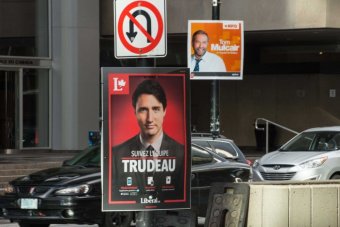
Punjabi Canadians won 18 seats in the recent election in Canada

By Ishani Duttagupta, ET Bureau | 25 Oct, 2015, 10.56AM IST

Longest-serving south Asian MP Deepak Obhrai, who won for the seventh term from Calgary Forest Lawn as a Conservative Party candidate, believes that no government in Canada — Conservative or Liberal — can ignore the Indian community any more. “There were a large number of candidates of Indian origin in the fray across party lines [44 Indian Canadians contested of which 36 are Punjabi].Longest-serving south Asian MP Deepak Obhrai, who won for the seventh term from Calgary Forest Lawn as a Conservative Party candidate, believes that no              government in Canada — Conservative or Liberal — can ignore the Indian community any more. “There were a large number of candidates of Indian origin in the                     fray across party lines [44 Indian Canadians contested of which 36 are Punjabi].

In Canada’s newly elected Liberal government, under prime minister designate Justin Trudeau, Indian Canadians have notched up a record number of 19 seats. That’s more than double the seats they held in the previous government of eight. Of those 19, 18 are of Punjabi origin — five more than the 13 MPs elected from Punjab in the 2014 Lok Sabha elections.

While many of these seats have been won in Canada’s largest province of Ontario, a hub for the Indian immigrant community, five of the winners are women. These include Anju Dhillon, a lawyer who contested for the Liberal Party from Dorval-Lachine-La-Salle and became the first Indian-Canadian to win a seat in the French-speaking province of Quebec. Fellow Liberal candidate Ruby Sahota, also a lawyer, won from Brampton North, a riding (constituency in Indian parlance) in Ontario, which has a large immigrant population.

Women Power

“Indians in Canada are active on democratic forums and turned up to vote in large numbers in our riding. In fact, the Indian-Canadian community is very active in political roles because they bring a long tradition of public life from back home in India,” says Sahota, a second-generation immigrant whose parents moved to Canada from Punjab. And while she believes that as an Indian-Canadian MP representing a large number of immigrants she will highlight issues related to the south Asian community, she also wants to focus on young women in her constituency.

“Many young women, some with children, supported me in my campaign. Some of them were from the Indian community, too. As a lawyer and mother myself, I would like to support them in a big way in remaining in the workforce because I see public life and politics to be a male-dominated world so far,” Sahota told ET Magazine.

Pallavi Banerjee, assistant professor of sociology at the University of Calgary, believes that while Indian-Canadians have always been a powerful minority community, the record number of MPs elected in the 2015 federal elections will energise the community further and allow them to find a stronger voice in legislation and policy-making at the highest levels.

“The high representation of women of Indian/South Asian origin in elected offices is also commendable. Besides, the much-needed presence of women in elected offices and public life, the engagement of Indian and South Asian women in public life explodes the stereotypes of South Asian women as docile, dependent and home-bound,” said Banerjee, whose work focuses on immigration in a big way.

“Compared to the US, the level of engagement in political and public life of Indians in Canada is definitely higher. What’s fascinating is how prominently the community is represented across political parties and across provinces,” Banerjee adds.

Indo-Canada Connection

Longest-serving south Asian MP Deepak Obhrai, who won for the seventh term from Calgary Forest Lawn as a Conservative Party candidate, believes that no government in Canada — Conservative or Liberal — can ignore the Indian community any more. “There were a large number of candidates of Indian origin in the fray across party lines [44 Indian Canadians contested of which 36 are Punjabi].

Those who have been elected come from diverse backgrounds and I hope they will all bring some unique value to parliament,” Obhrai said. He is, however, somewhat concerned that some of the candidates are freshers with no experience and may have rode a Liberal wave that swept the Canadian elections.

Sukh Dhaliwal, the newly elected Liberal MP from Surrey-Newton in British Columbia, of course, has no such concerns.

“Canada has always had one of the most diverse parliaments in the world. There is a long history of MPs who were born outside of Canada, and the Liberal Party was the first to appoint an Indo-Canadian as a Cabinet minister in 1997,” Dhaliwal said. He added that Indo-Canadians are prominent in public life across Canada with a large number of candidates for the recent elections from Ontario, Alberta and British Columbia.

“In my city of Surrey, Indo-Canadians make up more than 30% of the population. Across provinces, Indo-Canadians are stepping up in all areas of society to make significant contributions that are appreciated by all Canadians,” said Dhaliwal.

While the Liberal Party in Canada is seen as a party of immigrants, many of the first-generation immigrants from India who went to Canada in the 1970s supported late prime minister Pierre Trudeau, the father of Justin Trudeau, the new PM of Canada, points out Liberal politician Ruby Dhalla, who became the first woman MP of Indian origin in Canada in 2004.

“There are pockets in Canada known as mini India and mini Punjab. The Indian diaspora overall has done very well here in every facet of Canadian life including healthcare, business, media, real estate and politics. The community has succeeded through hard work and determination,” adds Dhalla.
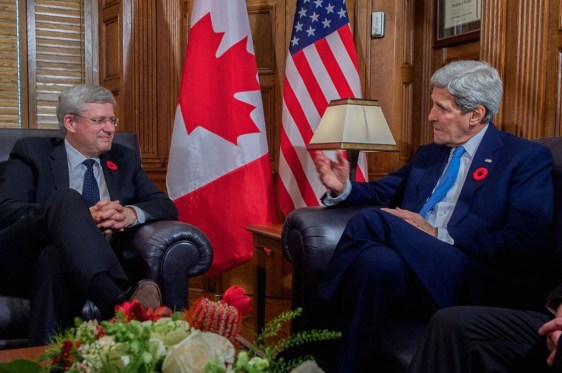
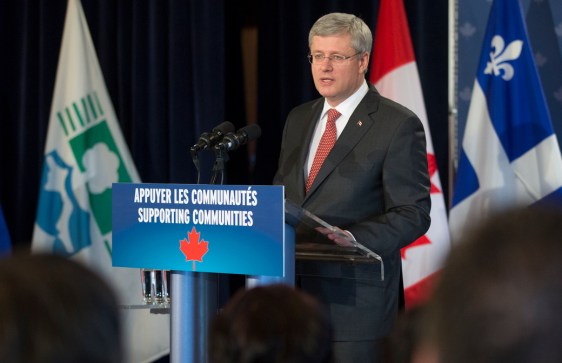
Canada’s Existential Question: Harper’s Legacy and Future » Harvard Political Review

Many critics believe that Harper has fundamentally worsened the state of Canadian politics during his tenure, and that his legacy is a bad one.

Source: Canada’s Existential Question: Harper’s Legacy and Future » Harvard Political Review

Federal Election 2015: Voting Records Are Made To Be Broken: LET’S DO IT!!!—Just Saying….

October 19, 2015          Andrew Phillip Chernoff                Just Saying….

Image result for federal election 2015 voteJust-saying

“Paradigm Shift” Needed In Ottawa

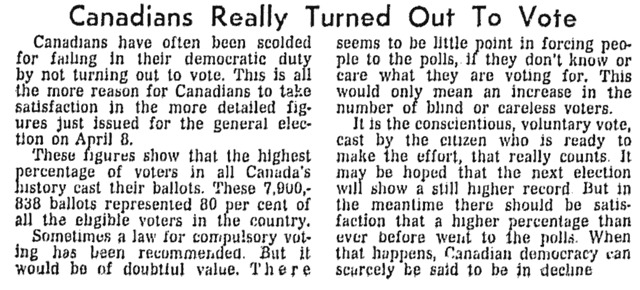
 On April 8, 1963, Canadians set a record unequaled or bettered since, with the highest percentage of voters in history when 80 per cent of all eligible voters in 1963 cast their ballots.

From: The Montreal Gazette – May 13, 1963:

canadalargestvote

Elections Canada reported on Oct. 14th, 2015:
According to the preliminary figures, some 3.6 million electors voted at the advance polls in this general election. This is a 71% increase from the 2,100,855 electors who voted in advance in the 2011 general election.

So far, Canadians from coast-to coast-to coast are going to the polls in record numbers.

Indeed, Canadian democracy can scarcely be said to be in decline it seems, as has been reported recently.

Let’s make this “paradigm shift” happen in Ottawa, David Herle, principal partner at The Gandalf Group, a Toronto-based research and consulting company, urges because Canadians need to feel connected to Parliament and Parliament needs to be seen as relevant to their lives, he outlined in the article, Democracy and the decline of Parliament,  published May 2, 2013.

“Only then can we begin to close the gap between voters and our political institutions with the goal of ultimately strengthening our democracy.”  Herle continued.

Star columnist Bob Hepburn who interviewed Herle for the article, started out by introducing his readers to Herle this way:

Since his days as Paul Martin’s campaign chairman ended, David Herle has given a lot of thought to the state of our democracy and the increasing disconnect between Parliament and Canadians.

And the more Herle studies the issue, the more the former prime minister’s strategist worries.

“There’s a growing gap that could have serious long-term implications for the health of our democracy” from voter turnout to policy formation, Herle says over coffee one recent afternoon in downtown Toronto.

“Voters look at Ottawa these days and feel the issues being debated up there have no impact on their daily lives,” he says.

“There’s also a serious decline in what people expect from government. As well, they’ve stopped looking to government for help and for the most part they don’t think it matters who is in power.”


Hepburn stated in the article that a poll in Fall 2012, “suggested barely 27 per cent of Canadians believe Ottawa is dealing with issues we really care about.”

Most people are worried about daily issues, such as their children’s education, looking after aging parents and getting decent health care. But other than writing cheques to the provinces, Ottawa has opted out of health care, education, transportation and other issues that affect our normal lives.

There are no bold new ideas emerging from Ottawa today that will engage Canadians and make them feel that what happens in Parliament really does play a role in their lives.

No longer is there serious talk in Ottawa of programs that would affect most Canadians directly, such as a national child care strategy, a national plan for big cities or an agreement for natives along the lines of the Kelowna Accord signed by Martin.

Instead, there is a narrow set of issues that Prime Minister Stephen Harper is pursuing and for the most part the opposition parties are adhering to them.

Because voters have stopped looking to Parliament for help, Ottawa has stopped responding to their needs, Herle believes.

Well, Canadians are engaged in this federal election.

The early voting poll results indicated that in resounding fashion.

Whether it is to solidify the Harper’s Conservatives hold on Canada, or to make a statement that change is on the way with an exclamation point; Canadians are alive and well, and have risen to affect what kind of Parliament will play a role in their lives.

The implications for democracy are huge in this federal election when so many Canadians have believed already it was not a waste of time to try to make a difference or to attempt at creating meaningful change through their democratic right to vote.

https://i0.wp.com/canadians.org/sites/default/files/publications/HowToVote-General.jpg

According to Hepburn, Herle is not alone in voicing similar concerns:

Conservative MP Michael Chong (Wellington-Halton Hills), writing in Policy Options magazine in 2010, predicted that “if Parliament is becoming increasingly irrelevant to Canadians and is not central to public debate in Canada, then public policy will be determined in an increasingly non-democratic fashion.”

Chong suggested that reforming question period, the insult-laden daily shouting match that is the only reference most Canadians have with politics, is a necessary first step to restoring Parliament’s relevance. He called for improved decorum, more time both for questions and answers and a requirement that ministers actually respond to questions directed at them.

Chong is correct about the possible consequences for democracy and the role of Parliament. That’s because if voters have given up on Parliament, it means they have lost faith in politicians to look after their interests.

To not exercise your  constitutional right to vote and support a democratic Canadian government, would as Herle suggests,  “provide the ruling party with enormous leeway to abuse parliamentary traditions and procedures.”

Let’s introduce fresh air into our parliament and federal government and take back what is ours as Canadians: our right to decide; thereby beginning to, as Hepburn writes, “… close the gap between voters and our political institutions with the goal of ultimately strengthening our democracy.”

Just Saying……..

…..What’s that??….Who won???…..Who won, what??……Ohhhhhh……

The 1963 federal election resulted in the defeat of the minority Progressive Conservative (Tory) government of Prime Minister John Diefenbaker

The Liberal Party of Lester Pearson ran on a platform promising that, if elected, they would begin their term with “60 Days of Decision” on questions such as introducing a new Canadian flag, reforming health care, and a public pension plan, along with other legislative reforms.

Despite winning 41% of the vote, which is usually sufficient for ensuring the election of a majority government, the Liberals fell five seats short of their target. The Liberals formed a minority government that was dependent on the support of the social democratic New Democratic Party (NDP) in order to pass legislation.

The social-democratic NDP had been formed in 1961 by a socialist party, the Co-operative Commonwealth Federation, and by the Canadian Labour Congress. The 1963 election was the second vote contested by the NDP. The party won slightly fewer votes, and two fewer seats, than they had received in the 1962 election. They were again disappointed by the failure of their new partnership with the labour movement to produce an electoral breakthrough, particularly in the province of Ontario, which has the largest population and the largest number of seats in the House of Commons.

Social Credit was unable to increase its representation in western Canada, and lost four of its Quebec seats – this despite gaining a slightly better share of the vote compared to 1962. Indeed, 1963 represented the highest share Social Credit would ever get. The continuing lop-sided result led to a split in the party when Thompson refused to step aside so that Caouette could become party leader. Caouette and his followers left the Social Credit Party to sit as a separate social credit caucus, the Ralliement des créditistes.=>https://en.wikipedia.org/wiki/Canadian_federal_election,_1963

Anybody see what I see…..I mean….does history really repeat itself???  Of course not….the 1963 Conservatives had a minority government….but a minority government is possible, is it not????? Who will it be….Check back on Tuesday, October 20, 2015.