
John Ibbitson The Globe and Mail Jan. 11 2014
He has emerged from Jack Layton’s shadow, won over his party and earned the respect of people who follow Question Period. But now Thomas Mulcair has a bigger battle – to win over the country. And he must do it this year, long before the 2015 election campaign. He must also raise money at a rate his party has never known, and connect with a suburban middle class unsure of who he is. Most important, he must find some way to steal the spotlight from the hyper-charismatic Justin Trudeau.If he succeeds, persuading Ontario to swing left – and Quebec to stay there – he will offer New Democrats their best-ever shot at power. If he fails, he may lead them to the back of the pack.
More Related to this Story

Video
Video: Mulcair touts NDP as ready to lead

Politics Video
Video: What Justin Trudeau gains in brand, he may lack in policy

Politics
Video: Tom Mulcair: PMO ‘changing story’ on Senate scandal e-mails

Video
Video: Mulcair holds Harper’s feet to the fire over Duffy scandal
High stakes. But Mr. Mulcair is supremely confident after his brilliant performance during the Senate expenses scandal; his relentless, prosecutorial grilling damaged Mr. Harper’s credibility and solidified his own reputation as a tactician.
“In 2015, people are going to be looking for somebody able to run the country,” he told The Globe and Mail during a wide-ranging conversation in his spacious Centre Block office above that of the Prime Minister. “I’ve got 35 years’ experience.”
The question is whether, even with those 35 years, Canadians are ready to hand the reins to the tax-and-spend social democrats, and to a leader often portrayed as impersonal and inaccessible?
His chief rivals have problems. Mr. Harper is battling scandal and voter fatigue while Mr. Trudeau is untested and still struggling to revive a party not far removed from its deathbed.
But both are much better known, and even the oft-maligned Prime Minister is more popular, a deficit Mr. Mulcair must overcome quickly. In politics, momentum is a fickle force, and the afterglow from the Senate scandal may soon fade.
His party has a strategy, however, one it hopes will make Mulcair a household name, and this week the first polling of the new year offered some encouragement. Nanos Research reports that, among voters asked which party they would consider endorsing, NDP support is holding firm while that of both the Liberals and Conservatives has not. Even better, Mr. Mulcair’s personal appeal went up and Mr. Trudeau’s fell, a sign the Liberal leader’s honeymoon may be coming to an end, just as a Tom-meets-the-people tour is to begin next week.
A threat to party unity – free trade with Europe – will reappear when Parliament returns Jan. 27, but he at least has had practice at healing internal rifts.
When Jack Layton lost his battle with cancer on Aug. 22, 2011, the NDP faced a crisis: how to replace a leader so beloved that even a Conservative luminary, former prime minister Brian Mulroney, remembered him as “someone who turned out to be a great man.”
The ensuing leadership campaign attracted eight candidates but boiled down to a race between Mr. Mulcair and another Quebecker: Brian Topp, a former party president favoured by the NDP establishment. Although he was deputy leader and had been in Ottawa for four years, Mr. Mulcair was still considered an outsider who might drag the party toward the mushy middle. He was also known for his quick temper. Feelings against him ran so high in some circles that former leader Ed Broadbent felt compelled to speak out.
“People should look carefully at the fact that, of the people [in caucus] with Tom, 90 per cent of them are supporting other candidates,” the NDP’s grand old man, then 75, told The Globe and Mail.
Nonetheless, when the vote was held in Toronto on March 24, 2012, Mr. Mulcair won convincingly on the fifth ballot. He then moved quickly to heal internal rifts – leadership rivals were given prominent positions in his shadow cabinet, former Layton aide Karl Bélanger became his principal secretary and, later, Anne McGrath, his predecessor’s chief of staff, was asked to lead preparations for the next election.
He also had to weather a crisis that divided his caucus, again without being dictatorial. When the sovereigntist Bloc Québécois introduced a motion to repeal the Clarity Act, the federal legislation that requires a clear majority vote before a province can try to secede, the NDP was torn. Their own policy was similar to what the Bloc wanted. But while some MPs, mostly from Quebec, supported the motion, others wanted nothing to do with propping up separatists.
In a caucus meeting that lasted hours, Mr. Mulcair heard everyone out. Later, he met MPs individually and in small groups to explain that, while the party could never support the Bloc motion, neither could it repudiate its own policy. In the end, the NDP put forward a “unity bill” worded so that it could vote against the Bloc.
One member crossed the floor. But party insiders say that, by showing such patience and willingness to compromise, Mr. Mulcair has since enjoyed solid support from his caucus. He is especially close to the many rookie MPs from his home province, as much mentor as leader, while instructing them in the campaign skills they will need if the party has any hope of preserving its gains in Quebec.
As a result, the NDP has largely avoided the “bozo eruptions” that are common to large groups of greenhorn MPs.
“What impresses pollsters and analysts in Quebec is the fact that the NDP rookies are doing well with no real experience,” says Montreal marketing expert Jean-Marc Léger. “There have been no big mistakes, and that has surprised everyone.”
At the same time, Mr. Mulcair is obsessive about message discipline (forming a coherent response to any issue and sticking to it) as well as keeping the leader front and centre as the face of the party. It’s the same formula his chief rival used to cement his control over his yet, like the Conservatives, the New Democrats seem to accept the Mulcair mantra that, with power in striking distance, everyone must be flexible and exercise restraint.
For example, Mr. Layton failed in 2011 to persuade the party faithful to change the preamble to the NDP constitution, with its lofty lefty references to “democratic socialism” and commitment “to modify and control the operations of the monopolistic productive and distributive organizations.”
When Mr. Mulcair became leader, he strongly endorsed a fresh rewrite, which relegated socialism to a party “tradition” and promised simply “to address the limitations of the market in addressing the common good.” This time the changes passed.
Even the once-skeptical Mr. Broadbent has come around: “I think he’s doing a splendid job,” he says. The two have dinner on occasion and talk regularly. As for the alarm he raised, Mr. Broadbent insists: “I’m totally happy about the present. The past is the past.”
Of course, it’s not all hearts and flowers. Within the confines of his office, the Leader of the Official Opposition shares the Prime Minister’s reputation for micromanaging, a trait his senior staffers have been working to temper. (They report that he has, reluctantly, come to realize that a press release delivered two hours late because he insisted on signing off personally on it is a press release wasted.)
Where Mr. Layton saw himself as a chairman of the board, happy to delegate responsibility, Mr. Mulcair prefers to exercise tight control, giving his aides limited autonomy. He holds brainstorming sessions to hash out a response to emerging issues and relishes a good argument, but soon makes up his mind and, like Mr. Harper, rarely feels there is anyone smarter in the room.
Both men can be uncompromising – a quality often prized in a leader – but there are differences between them. Mr. Mulcair is capable of changing his mind and not known to hold a grudge, while some days the Prime Minister seems to be about nothing but grudges.
“Tom is tough, but for him it’s never personal,” says NDP House Leader Nathan Cullen, who ran against him for the leadership.
Still, Mr. Mulcair and Mr. Harper seem so alike that now the only real difference between their parties, in the eyes of one NDP insider, “is that we’re good and they’re bad.”
That said, Mr. Mulcair has learned to bite his tongue – for example, when he invites small groups of MPs to discuss issues and priorities over dinner at his official residence. Those who have been to a Stornoway session say he lets everyone else talk, and sums up the discussion at the end of the meal.
The path to government also requires setting priorities, and Mr. Mulcair has chosen wisely. The NDP has pushed for bolstering the Canada Pension Plan, now a top issue for several provinces and one that threatens to leave Finance Minister Jim Flaherty and the Conservatives behind the curve.
The party’s opposition to untrammelled development of the Alberta oil sands has been echoed in powerful resistance to both the Northern Gateway and Keystone XL pipelines.
“I want my first act as prime minister on the international stage,” he says, “to be my attendance at the Paris conference in December, 2015, on the Kyoto Protocol” – the historic climate agreement that he says the Liberals signed in 2002 as a “communications stunt.” (A stunt that later became what environmentalists consider a tragedy when the Harper government withdrew from the accord altogether.)
But he is also an economic realist, and the NDP supports a proposed pipeline to carry western oil to the east. “We want development that benefits everyone, and we’re actually going to get it done,” he says, dismissing both the Liberals, for constantly saying one thing and doing another, and Mr. Harper, for his cynicism and “grim view of the world.”
Those are fine fighting words, but there is an old saying that he who wields the dagger may never wear the crown – especially if he’s a realist chasing an idealist in the polls.
The Justin factor
Even before walking off with the Liberal leadership last spring, Mr. Trudeau had emerged as the most popular public figure in the country: a handsome, charming, relentlessly sunny political animal and heir to a storied name. As well as being younger than other political leaders (he turned 42 on Christmas Day), he is blessed with the warmth and charisma that often come with growing up in the public eye.
In contrast, Mr. Mulcair is 17 years his senior and the product of an upbringing that encouraged toughness rather than warmth. He doesn’t endorse the notion that he is a hothead, but does admit to being “determined.”
“I come from a very modest background … I’ve had to work hard all my life,” he explains. “So I sometimes have a very frank way of dealing with things.”
Born on Oct. 24, 1954, he is the second of 10 children. His father Harry was an Irish Quebecker who, in the 1970s, moved the family from the Montreal suburb of Laval an hour north to tiny St.-Anne-des-Lacs in the Laurentians, where he was an insurance executive. His mother Jeanne is a francophone who taught school.
Together, they lived and breathed Catholic social activism and Liberal politics (his mother’s great-grandfather, Honoré Mercier, was Quebec’s ninth premier). “I have known since I was 14 that I wanted to go into politics,” Mr. Mulcair told one journalist.
Also while in his teens, he met his future wife (then visiting from France, Catherine Pinhas is a psychologist specializing in palliative care), before going on to earn a double degree in common and civil law from McGill University. “I didn’t work as a research assistant in law school,” he recalls. “I was making tar-and-gravel roofs.”
After graduating, Mr. Mulcair joined the provincial justice ministry in Quebec City before moving to the Conseil de la langue française, the agency created to enforce new language laws introduced in 1977 by the Parti Québécois.
These were difficult years to be a federalist. Réné Lévesque was premier, and separatists dominated the provincial bureaucracy. But Mr. Mulcair relished a good scrap, and in 1983 became director of legal affairs for Alliance Quebec, an anglophone lobby group later discredited after becoming more radical.
After two years, he left to practise and teach law, entering politics in September, 1994, a month before his 40th birthday (and a few months after the death of his father). He chose the provincial Liberals, then in office and the only real option for a federalist in Quebec, winning his seat even as the party lost power (setting the stage for the PQ’s 1995 referendum on national unity).
In the National Assembly, he was known as a fierce partisan. He cost his party $95,000 when one rival sued for defamation. Still, when the Liberals returned to power in 2003, Mr. Charest made him minister of “sustainable development, environment and parks.”
In that role, Mr. Mulcair brought in landmark legislation on sustainable development, but three years later clashed with the premier, a former federal Tory, and resigned from cabinet over a decision to open a park in the Eastern Townships to commercial development.
With his political career in limbo, he considered his options, talking to the Greens and even the federal Conservatives, but was more inclined to revive his legal career. Then, still a Liberal backbencher, he was invited by Jack Layton to address an NDP policy convention in Quebec City. The two men clicked, and he was soon being pressed to jump to federal politics as Mr. Layton’s Quebec lieutenant.
The following year he became just the second federal New Democrat ever elected in the province. He captured Outremont, until then a Liberal bastion in Montreal, in a by-election, repeating the feat (by a mere 1,300 votes) in a general election a year later.
And then came the miraculous Orange Wave of May 2, 2011, when popular affection for le bon Jack, coupled with disenchantment with the other options, created a surge of support that delivered 59 of the Quebec’s 75 seats (this time the Mulcair margin was nearly 13,000), and made the NDP the Official Opposition for the first time.
A month later, as a filibuster in the Commons was ending, according to Building the Orange Wave, a recent book by former Layton aide Brad Lavigne, Mr. Layton turned to his House Leader and asked: “Tom, will you be able to give the wrap-up speech? I’m feeling a little discomfort.”
“Of course,” Mr. Mulcair replied, gently patting his leader’s back. The jacket was soaked in sweat.
Polls that defy logic
A year after Mr. Mulcair moved from MP to party leader, Mr. Trudeau did the same, soon soaring in the polls. But his inexperience and lack of gravitas left him ill-equipped to deal with the tawdry accusations and sleazy machinations of the Senate scandal last fall.
Indeed, to most observers, his performance was embarrassing beside that of Mr. Mulcair, even if the NDP’s “roll up the red carpet” campaign to abolish the Senate seemed quixotic at first. As the third party, the Liberals receive less time in Question Period, and Mr. Trudeau’s determination not to be dragged into the muck – negative campaigning, relentless partisanship and TV attack ads – left him little room to manoeuvre.
Yet he more than Mr. Mulcair seems to have profited from the Tories’ discomfiture. A recent Ipsos Reid poll placed the Liberals at 35 per cent support, the Conservatives at 29 per cent and the NDP at 26.
In the eyes of many, this payoff was demonstrated in four federal by-elections held Nov. 25. The Liberals kept seats they already held in Montreal and Toronto, and came close to toppling the Conservatives in one of two ridings in Manitoba, where the NDP’s performance was dismal – perhaps because of Mr. Mulcair’s approach to the oil sands or unhappiness with the provincial NDP government. As for the near-upset in Brandon Souris, the Liberals cleverly recruited the son of an MP who represented the riding for 30 years as a Conservative.
In the East, the NDP’s results were better, as the party more than doubled its vote (from 15 to 36 per cent) in a Toronto riding vacated by Liberal high flier Bob Rae. Perhaps the best news came from Montreal, where support held firm in Bourassa, another Liberal stronghold, showing that the party remains formidable in a province it long considered a wasteland.
Quebec will decide which party comes out ahead when the Liberals and NDP drop the gloves for real next year, so Mr. Mulcair pulls no punches when discussing the so-called “natural governing party.”
“Canadians wind up so many times like Charlie Brown on his back after Lucy has pulled the football away – the Liberals flash left, and turn right. You can’t treat people that way and expect to get away with it over time.
“They’re going to crab-walk over to my voters and say, ‘Come on, you can trust us this time.’ And we’re going to say, ‘You can’t.’ ”
But Quebec hasn’t backed a winner since 1988. Elections are now decided in the big cities of English Canada, which means that, if he is to become prime minister, Mr. Mulcair must tackle the incumbent. On this front, the NDP is fighting fire with fire. It has tried to emulate the Conservatives’ organizing tactics and, leading up to the 2015 campaign, party insiders say, it will position its leader as a virtuous Stephen Harper – tough, competent, not necessarily likeable, but more focused on the needs of struggling middle-income families and from a party devoid of the sleaze that now clings to Conservatives.
They won’t admit it on the record, but senior Conservatives worry that the New Democrats could eat into their support among suburban immigrant voters in the 905 area code surrounding Toronto – where more than anywhere else, the NDP must grow.
Victor Fingerhut, a Washington-based political consultant who has worked with the NDP, believes it also has growth potential if it can persuade voters it is “the only party that stands up for working people.”
But that will be a tall order, in light of one issue that promises to place a serious obstacle in Mr. Mulcair’s path.
Rock and a hard place
Although united behind their leader, New Democrats are a house divided when it comes to the government’s much-discussed Comprehensive Economic Trade Agreement.
Mr. Mulcair insists that he supports the principle of free trade with Europe. After all, the potential gains are tempting – a market of 500 million people in 25 developed nations. And Europe is an NDP kind of place, with stronger labour and environmental protections than Canada and a long tradition of electing social democrats.
Yet the New Democrats say they want to see the final text of CETA and hold public consultations before passing judgment. The Liberals quickly endorsed the pact in principle – Mr. Trudeau even stood in the House and congratulated Mr. Harper – but senior NDP officials admit privately that Mr. Mulcair is trying to buy time.
He knows the party must find a way to support CETA, or lose any credibility that it can be trusted to manage the economy. Nonetheless, many in the labour movement oppose the agreement strongly, as do social activists. They see it as a sellout that will let European companies sue Canadian governments that try to buy local, could cost fishers and farmers their livelihoods, and will increase health costs with greater patent protection against generic drugs.
Unifor president Jerry Dias says his union, the private sector’s biggest (created when the Canadian Auto Workers and Communications, Energy and Paperworkers merged last year), is particularly upset with provisions that would increase the duty-free exchange of vehicles.
“We build large cars,” he points out. “Our cars are not built for the European market.” But European cars are built for North America, and “will likely double their exports to Canada. And all that does is eat more and more into the Canadian auto industry. It’s just another nail” in the coffin.
Mr. Dias is a big fan of Mr. Mulcair, saying that “he knows that his relationship with labour is important … He really understands that we deliver.” But if the NDP supports CETA, “I think it will hurt how we perceive them.”
Even the delay may prove costly. The Conservatives see the agreement as their most important economic initiative and badly want to campaign as the only party to trust with the economy. They are already suggesting the NDP is opposed – if Thomas Mulcair can’t make up his mind, they will do it for him.
Planning on votes
Even if he solves his CETA dilemma, Mr. Mulcair still has to persuade voters that the heirs to Ontario’s Bob Rae disaster can actually form a credible government.
He is not without assets. When Ipsos Reid polls voters on which party shares their values, the New Democrats rule on anything social while the Conservatives dominate on economic affairs. “The NDP owns the compassion side of the agenda, the Tories own the management side, and the Liberals own nothing,” observes pollster Darrell Bricker.
But the clock is ticking. The Party Power Index compiled by Nanos takes into account both a leader’s performance and his party’s popularity, and last fall had Mr. Mulcair gaining ground at the expense of both Mr. Harper and Mr. Trudeau.
This week’s index has the NDP at 49.3, a half-point behind the Conservatives, while the Liberals, although falling, are still well ahead at 56.2. Mr. Fingerhut says that most people who would never support the Conservatives still have it in their political DNA to vote Liberal: “That’s the battle Mulcair has to face. He can’t be as good as Trudeau or even a little bit better than Trudeau. He’s going to have to be a whole lot better, to defeat him.”
But this time, the New Democrats are the Official Opposition, they still enjoy a credible level of popular support – and they’re making changes as they prepare for the election. The party has already updated both its fundraising mechanism, this week reporting that December donations reached $800,000 (a monthly record but still a far cry from the $2-millon collected by both main rivals) and its voter-identification efforts.
Now, to raise his profile, its leader is embarking on a cross-country series of community talks and kitchen-table conversations with working families, stressing two major themes. The first will be “affordability,” as the party tries to match the Conservative focus on consumer issues by targeting bank-machine fees, credit-card interest rates, electronic billing charges and other ways customers give and banks receive.
The second theme will be energy policy. Mr. Mulcair concedes that natural resources are “the motor of the Canadian economy,” as he declared in a speech last month, but he will accuse the Tories of squandering export opportunities through shoddy and short-circuited environmental reviews, dooming proposed pipelines to years of court challenges and leaving Canada with an international reputation for dirty oil and indifference to climate change.
The goal, senior NDP strategists say, is to depict Mr. Harper as the leader of a tired and corrupt administration interested only in helping his big-business friends, and Mr. Trudeau as a vacuous lightweight with few convictions and fewer policies.
Against them, Mr. Mulcair will be portrayed as an experienced leader who understands the struggles of working families and has specific proposals to help them. He and his message also will be promoted in local radio and newspaper advertising, but there will no attack ads and, thus far, no television ad campaign this year.
One thing that won’t change: the beard. Canadians don’t like them on politicians – the last prime minister elected with a beard was Alexander Mackenzie in 1873. But Mr. Mulcair has had his since he was 18, and not even his wife has been able to persuade him to give it up.
There are already signs that his personal profile is starting to rise. “In airports,” he says, “I used to get, ‘Oh, that’s the NDP guy.’ Now I get systematically, ‘Oh, that’s Mr. Mulcair.’ And, by the way, it’s no longer ‘Mr. Muhclair’ or ‘Mr. Mulclair.’ ”
Insiders also cite an Ekos poll showing Canadians now more willing to have a drink with him (24 per cent) than with the Prime Minister (22).
If only a whopping 44 per cent of them wouldn’t prefer to bend an elbow with Justin Trudeau.

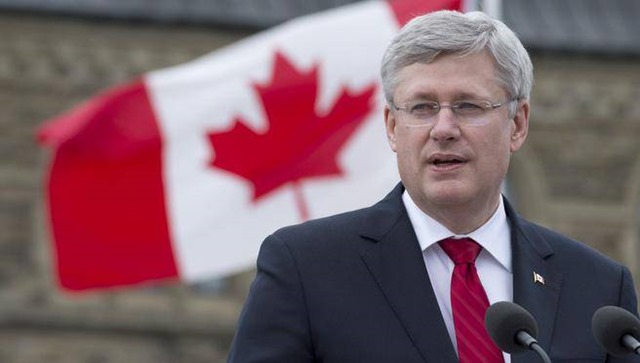 Three little-tent parties suit Stephen Harper just fine, because small, dirty and divided is his game, writes Ralph Surette. (ADRIAN WYLD / CP)

 Andrew Phillip Chernoff