

BC had highest rates of child poverty for 9 of last 10 years under #BCLiberals: http://bit.ly/1cMPY9Y #bcpoli
Category Archives: B.C. News
Vaughn Palmer: ‘Growth-sharing’ model eyed for public sector union deals
Finance minister’s plan would directly tie public sector compensation to provincial economic growth
By Vaughn Palmer, Vancouver Sun columnist November 27, 2013
 Finance Minister Mike de Jong says the provincial government wants to ‘share the benefits of (economic) growth with the people that helped us get there.’Photograph by: Adrian Wyld , THE CANADIAN PRESS
VICTORIA — Finance Minister Mike de Jong was winding up a status report on a provincial budget that remains balanced on the edge of a razor Wednesday when he got to the news about the government’s mandate for the next round of public sector wage negotiations.
Gone are “net zero” and “cooperative gainsharing,” themes of the last two rounds. Enter “economic growth-sharing,” the government’s watchword for bargaining on contracts that expire next March 31.
The Liberals, taking their lead from expectations of modest growth in the years ahead, will offer correspondingly modest increases in wages and benefits to public sector workers. Wanting long-term stability as well, they are seeking settlements in the range of five per cent over five years.
But if the economy outperforms expectations, the government is prepared to translate the resulting revenue windfall into additional raises for public sector workers.
“I’m trying to be candid about the limited means at our disposal for locked-in general wage increases, “ de Jong told reporters. “This is a mechanism by which if collectively we can do better, the government is saying we want to share the benefits of that growth with the people that helped get us there.”
The starting point for de Jong’s proposed “mechanism” would be the annual growth projection from the independent forecasting council. The council is a defined-in-law panel of economists and other experts that meets every December to set the parameters for the following year’s provincial budget.
The finishing point would be the actual rate of growth, as determined after the fact by Statistics Canada in its annual calculations of “real gross domestic product at market prices” for the country’s provinces and territories. Real GDP growth, in shorthand.
In the event the latter performance exceeds the former projection, the government is proposing to split the difference in terms of an additional wage increase for public sector workers. A rate of growth that exceeded the forecast by one percentage point, would translate into a half-point wage increase.
One public sector union, the Health Sciences Association, has already tentatively accepted the formula, albeit subject to ratification. The union’s 17,000 members, including technologists, pharmacists, radiologists, dietitians, therapists and other health care professionals, are voting this month and into the next on a deal reached Nov. 8.
If ratified, it would provide them with a basic increase of 5.5 per cent spread over five years, plus what are called “economic stability dividends” if the economy outperforms expectations in the final four years of the agreement.
As a hypothetical example, derived from the union’s briefing for its members, suppose that in December 2014 the members of the economic forecasting council project the rate of economic growth for the year ahead at 2.1 per cent, on average. The number is duly recorded and published in the provincial budget presented to the legislature in February 2015.
Then in November 2016 Statistics Canada weighs in, right on schedule, with its calculation of how much the economy actually grew in the preceding year: 3.1 per cent.
Out come the calculators and out goes a directive from the Ministry of Finance to employers in the health care sector to begin paying out an additional half a percentage point to HSA members starting in 2017.
What if the economy went in the opposite direction and underperformed the forecast? There’d be no wage cut. The Liberals want public sector workers to go along with this experiment, not run for cover from it.
If approved, the HSA deal would be the first of its kind, here or in most other Canadian jurisdictions. Also a significant step toward the Liberal goal of tying public sector compensation to overall performance of the economy. Perhaps it might dispose public sector unions and their members to be more supportive of measures to encourage resource development, investment and private sector growth.
“It’s about the partnership,” de Jong explained. “The government is in partnership with the private sector in terms of generating that economic growth and the public sector is part of that partnership, a big part.
“They are a key part of the equation and a key mechanism by which we work with the private sector to create the circumstances in which the investment occurs and the economy grows. This is a means by which we can formalize that partnership and share some of the benefits.”
Nor is the prospect purely hypothetical. The finance ministry has produced a chart showing that if the growth-sharing mechanism were in place for all public sector workers since the Liberals took office, the cumulative result would have been an additional three-per-cent increase in wages over the 12 years and a payout from the provincial treasury of almost half a billion dollars.
Still, as de Jong noted, the HSA deal is but a first step and a tentative one at that. “I’m going to be careful about prejudging the outcome of discussions,” he told reporters, not disguising that he and his colleagues hope that growth-sharing becomes the standard for this round of public sector bargaining.
A one-per-cent increase in provincial economic growth translates into an estimated $200 million to $350 million in extra government revenues. A one-per-cent wage hike for all unionized public sector workers equates to about $200 million.
Editorial: Legislature must meet to answer policy questions
Vancouver Sun November 21, 2013
British Columbians are seriously disadvantaged by a legislature that remains shuttered, unable to carry out its essential function as a forum for public debate.
An Agricultural Land Reserve in crisis? Forecasts showing B.C.’s long-touted greenhouse gas targets being blown? B.C. signing an agreement with Alberta in support of a national energy policy?
These are fundamental topics warranting a full public airing that, appropriately, would challenge and help shape public policy.
This won’t happen, however, because Christy Clark, who won a provincial election last May, mandated a 17-day session to pass the new Liberal government’s budget, and then proceeded to cancel any fall sitting of the legislature.
Since the start of the year, MLAs have sat for only 36 days.
As a result, government actions and policies are not receiving the scrutiny they would receive had elected members of the legislature been able to convene.
It is obvious that sitting governments prefer to have free rein, to carry on without being questioned or forced to defend decisions. But this is not in keeping with our system of responsible government.
Canada’s Constitution mandates that sittings of Parliament and the provincial legislatures must take place every 12 months.
A set number of sitting days is not specified, but parliamentary records show B.C.’s government sits relatively few days when compared to its counterparts.
The two other large provinces, Ontario and Quebec, in 2012 and 2013 sat for 143 and 121 days respectively. B.C. sat for just 83 days during that time period.
And so, even the most substantial matters are not being debated.
For example, we learned last week Agriculture Minister Pat Pimm pushed for a rodeo to be built in his riding on farmland that falls within the Agricultural Land Reserve and that Pimm is recommending to Cabinet the ALR broaden its considerations to take account of the needs of the oil and gas industry.
Is this a recommendation the government would favour in a province where less than five per cent of land is arable and as existing farmland dwindles by the year?
Also last week, internal B.C. government documents came to light showing development of a liquefied natural gas industry in the province could double greenhouse gas emissions, so that B.C.’s total emissions would be similar to those of Alberta.
This, when the province has pledged to reduce its total emissions by 2020 down to a third of its 2007 emissions.
Does the province propose to abandon its 2020 target?
Earlier this month, Clark met with her Alberta counterpart Alison Redford and reversed her earlier stand against Canada developing a national energy policy.
How does this new position square with her government’s rejection last spring of the Northern Gateway pipeline? Does this mean the government will be endorsing an expansion of Kinder Morgan’s alternative TransMountain pipeline route?
For now, with the legislature not sitting, the public can only guess at the answers to such questions. Clearly this is not the way democracy is supposed to work.
© Copyright (c) The Vancouver Sun
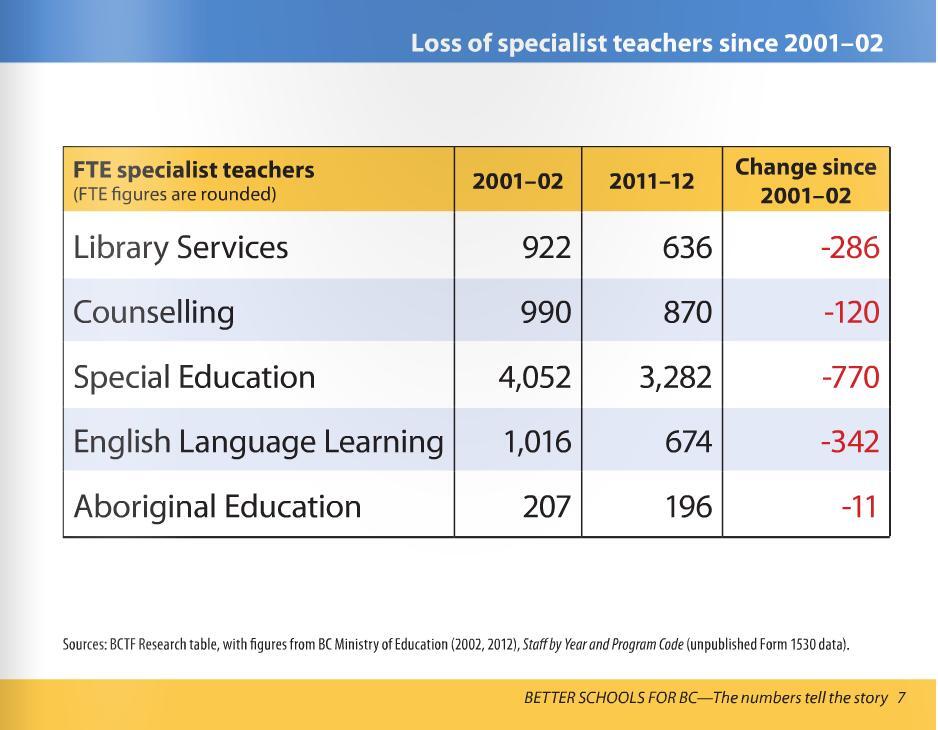
B.C. Lost 770 Special Education Teachers While Students With Special Needs Increased Between 2002 and 2012
Between 2002 and 2012, #bced lost 770 Special Education teachers while the # of students with special needs increased pic.twitter.com/z2yPMTETVq
B.C. NDP’s new president faces ‘daunting’ task
Rob Shaw / Times Colonist
November 23, 2013 10:29 PM

Newly appointed President of the BC NDP party Craig Keating addresses a crowd at the British Columbia NDP Convention in Vancouver, B.C. Sunday, Nov.17, 2013. Photograph by: JONATHAN HAYWARD, The Canadian Press
The B.C. NDP’s new president admits he’s facing a daunting task in regrouping his party after a devastating loss in the May provincial election.
Craig Keating, a North Vancouver councillor who was elected president at the party’s convention last weekend, said he’s got a clear mandate from New Democrats to modernize party organization and reach out to ridings where the NDP didn’t win to help craft a strategy for success in 2017.
“I’d be lying if I didn’t think it was daunting,” Keating said in an interview. “It’s not because the party is in disorder. There’s no doubt about it, we lost the election and we have debt to deal with, but there’s lots of positives. We have identified tons of supporters, we identified lots of volunteers … but nonetheless, the project here is: How do we win? And that’s my focus.”
Keating took over the presidency from Moe Sihota, the former NDP cabinet minister and Victoria-area MLA.
One of Keating’s first challenges will be to set up the leadership race to replace Adrian Dix, who announced his intention to resign after the NDP blew a perceived lead in the election and lost to Christy Clark’s B.C. Liberals.
The NDP’s provincial council has set the vote for fall 2014, and Keating said the NDP needs to find a facility, set entry fees and finalize race rules. “People aren’t going to get into the race until they know what the rules are,” he said.
The NDP still has $1.7 million in debt left from its election campaign, and Keating said he will need to creatively tackle fundraising to retire the loans and begin building a new war chest.
The party also needs to modernize the computer system it uses to contact voters, and keep organizers active in ridings where it lacks MLAs but thinks it can win, he said. The NDP must “build up a stock of goodwill” among volunteers and party members who have expressed unhappiness at how their involvement has been reduced to cutting donation cheques, he said.
“We need to start getting in touch with some people in communities across this province where we’re not elected, and start talking about what their realities are and how do we get a vision that’s going to get people out of their seats and voting for us in the next election,” he said.
There’s also the matter of messy internal grudges.
Documents at the NDP convention revealed the party still has four outstanding formal complaints against MLAs who helped overthrow former leader Carole James. An oversight committee recommended Keating deal with the situation quickly.
However, Keating said he has other priorities. “The file, in a literal sense, has not been handed to me,” he said. “It’s not on my immediate radar screen.”
There’s also a push to take a recent report into how the NDP blew the election and turn it into some sort of concrete action, Keating said.
“I encourage people to continue to reflect on what went wrong, but in the way of constructive criticism of what we do next,” he said.
© Copyright 2013
 Andrew Phillip Chernoff