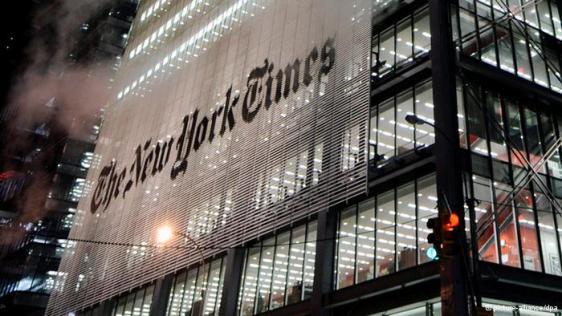
New York Times and Twitter websites ‘hacked’ by Syrian group | News | DW.DE | 28.08.2013.



The Internet has been around for two decades. But from a public-policy perspective, we’re just starting to figure it out. Fortunately, there are some online activities for which there is an established offline precedent. Most of us would agree that surveillance is one of those activities.
Governments — even generally transparent, democratic ones, such as our own — always have engaged in surveillance activities. But as a society, we long have recognized the need to place safeguards on surveillance activities. Wiretaps and other forms of “traditional surveillance” are subject to judicial oversight, requiring warrants. Outrage at RCMP activities in the 1970s, including unauthorized mail openings and wiretaps without warrants, resulted in the MacDonald Commission, and ultimately the creation of the Canadian Security Intelligence Service.
In fact, it was not so long ago that we found the issue of oppressive state scrutiny so repugnant that we were willing to go to war over it (albeit a cold one): The liberty-destroying surveillance regimes imposed by the Stasi, and by other communist agencies, epitomized the reason we stood up against the Soviets.
Fast forward a few decades, and we now have the U.S. National Security Agency’s PRISM program, which copies virtually every online message sent to and from the United States — all without transparent judicial oversight. Cell phone data, Facebook updates, Google searches, emails – pretty much all communications – are tracked and stored by the U.S. government.
And in case you thought you were safe because you’re Canadian, it turns out that your data is tracked and stored, too.
But, if the lack of vocal outrage on the part of Canadians is any indication, most of us are apparently fine with it. This is why my group, the Canadian Internet Registration Authority (CIRA), has decided to work with the polling firm Ipsos Reid to find out what Canadians think of online privacy and government surveillance.
We were surprised to find that about half of Canadians (49%) believe it is acceptable for the government to monitor email and other online activities of Canadians in some circumstances. When those circumstances include preventing “future terrorist attacks,” that number rises to 77%.
That means that more than three quarters of Canadians are fine with indiscriminate and ongoing government monitoring of Canada’s online activity without a warrant, as long as it is in the interest of national security.
Given past lessons about personal privacy, how can Canadians seem so apathetic? What is it about the Internet that changes our perceptions and values concerning civil liberties?
Our apathy may be partially due to the fact that only 18% of us start out with the baseline belief that our Internet activity is confidential to begin with. In fact, our research shows that 63% of Canadians believe the government already is monitoring who visits certain websites, while 40% think the government is collecting and saving Internet activity records so they can be reviewed in the future. If most of us aren’t expecting privacy on the Internet, it would follow that we would be ambivalent when we learn that government is indeed watching us.
This is a problem. Canadians deserve internet privacy.
The argument that “if you have nothing to hide, you shouldn’t be concerned” is baseless. Even in cases where people really do have something to hide, there are plenty of historical examples of behaviour that once was criminally sanctioned, but which we now recognize to be justified acts of resistance to unjust laws. Think about the civil rights movement, for instance.
The argument that the NSA collects only time, place and tech “metadata” — as opposed to the actual content of internet messages — also is not convincing. Such metadata provides information about whom you contact, when and how you contacted them, and where you contacted them from. With that information, a profile of an individual and their actions can be created. But this data is devoid of context. And so linkages can be inferred that erroneously connect individuals to illegal activity. We Canadians need only remember what happened to Maher Arar to understand what can happen when authorities misinterpret information.
Moreover, the definition of what constitutes “terrorism” in the eyes of governments continues to expand. From environmental activists to members of the Occupy and Idle No More movements, the net seems to continue to be cast even wider.
The time has come for a national dialogue about online surveillance in Canada. Yes, governments should have the power to monitor citizens under certain circumstances and with the appropriate oversight. But we are now in uncharted waters, with governments having unfettered ability to monitor the wide-ranging activity of an unprecedented number of people in every corner of the world.
To this end, my organization, the Canadian Internet Registration Authority — which manages the .CA domain space on behalf of all Canadians — will be dedicating its Canadian Internet Forum to a discussion on government and corporate online surveillance. I invite you to join us at cif.cira.ca.
If we found out that the government were opening every single letter in the Canadian postal system and monitoring all of our phone calls, Canadians would be enraged. Why is it, then, that when the government does the very same thing online, we become complacent?
National Post
Byron Holland is the CEO of The Canadian Internet Registration Authority.
Martin Ouellet, Canadian Press | 13/08/27 http://news.nationalpost.com

Former Premier of Quebec Bernard Landry in 2010. Vincenzo D’Alto / MONTREAL GAZETT
QUEBEC — The media of English Canada are to blame for pathetic, unfair coverage of the Parti Quebecois’ controversial minorities plan, according to prominent Pequistes.
A former premier called the coverage pitiful. And a current cabinet minister took to Twitter to condemn it Tuesday.
The complaints about the Anglo fourth estate came amid a furor over an impending plan by the PQ government to restrict public employees’ right to wear religious clothing.
In an interview with The Canadian Press, ex-premier Bernard Landry said he can’t accept some of the complaints directed at the Quebecois.
“I take pity on some of Canada’s English newspapers,” Landry said.
“It’s infuriating but it’s so pathetic to go and say that Quebec is xenophobic and racist — when from the start of our national adventure we intermingled with Amerindians. The majority of us have Amerindian roots, one-quarter of us have Irish roots, we have had six premiers of Irish origin. What are these people talking about? Why are they so misinformed in the rest of Canada?…
“Do they think our culture minister was born on Ile d’Orleans? It’s [Cameroonian native] Maka Kotto. We [the PQ] elected the first black person in the Quebec national assembly. The Bloc Quebecois elected the first Latino to the Parliament of Canada. They should open their eyes.”
Landry made a prediction: that the rest of Canada will one day “deeply regret” having embraced the doctrine of multiculturalism.
He says it leads to a lack of integration that harms social cohesion and, pointing to Europe, he says that ultimately risks feeding right-wing extremist politics over time.
“Multiculturalism will lead to more and more problems, like in Great Britain. In Holland, in Germany, same thing. Angela Merkel came out against this doctrine a while ago. Immigrants themselves are the first victims of multiculturalism,” he said.
“In the U.S., you never see a police officer with a turban. There are things worth regulating and I hope it gets done [here].
“The rule is, when you change country, you change country. They can’t expect to find everything here that they had in their country of origin. Intergration is a powerful signal that they need to adjust to a new nation.
“And the majority of them do it wonderfully.”
In fact, following Landry’s remarks, people shared images and anecdotes on social media of U.S. law-enforcement officers wearing turbans.
There’s also some research that suggests Canada’s approach to integrating immigrants has worked comparably well.
In the U.S., you never see a police officer with a turban. There are things worth regulating and I hope it gets done [here]
The most recent international Migrant Integration Policy Index placed Canada at No. 3, behind Sweden and Portugal, by using 148 criteria to measure successful integration.
The PQ says it will put forward its Charter of Quebec Values within several weeks, and seek to get it through the legislature.
Critics have called the plan unconstitutional, or worse.
A leaked version of the proposal says the government would bar public employees from wearing religious clothing — such as turbans, kippas, hijabs and visible crucifixes.
The plan may have enough support to be adopted in the legislature. The opposition Coalition Avenir Quebec says it would support parts of the plan, although it would apply the rules to far fewer public-sector workers.
The idea has majority public support in Quebec, according to polls, but it’s far from clear that such support would translate into more votes for the PQ.
Landry, 76, was briefly premier after he replaced the retiring Lucien Bouchard in 2001. He lost the 2003 provincial election.
A Jesuit-trained former lawyer, economist, civil servant, university professor and cabinet minister, Landry was best known in politics for a sharp tongue that once compared the Canadian flag to “bits of red rag.”
He wasn’t the only Pequiste to take a swipe at the Anglo-Canadian media on Tuesday.
The province’s Intergovernmental Affairs Minister Alexandre Cloutier, who is also the minister of “sovereigntist governance,” used Twitter to take a swipe at pieces in the Calgary Herald and National Post.
“Being called a xenophobe by the Calgary Herald,” he said, in remarks he repeated about the other newspaper. “Once again, a lack of perspective and understanding from the ROC.”
It’s not only Anglo pundits blasting the idea, though.
Although the editorial-writers in French have been less unanimous than their Anglo counterparts on the subject, numerous columns have denounced the PQ plan — a minority in the Journal de Montreal, but especially in Montreal La Presse.
One Tuesday in La Presse, by the newspaper’s chief editorial writer, called it an extreme measure that smacks of intolerance. He compared it to Maurice Duplessis’ persecution of Jehovah’s Witnesses in a piece titled, “The Tyranny of the Majority.”
Another in the same newspaper called it a manufactured crisis by the PQ, and urged respect for minority rights.
A column in the same newspaper last week compared the PQ approach to McCarthyism and, using the crude eight-letter English term for bovine droppings, pointed out the government’s inconsistency in preaching state secularism while keeping the crucifix in the legislature.
A pair of representatives from minority organizations interviewed Tuesday expressed concern about the direction Quebec politics was headed.
And they weren’t blaming English media.
David Ouellette, spokesman for the Center for Israel and Jewish Affairs, said things got tense in part thanks to sensational media coverage within Quebec a few years ago.
That news coverage created political pressure, amid which the then-Charest Liberal government created a commission to explore minority accommodations.
“Certain media milked it with very tempestuous and virulent declarations during the commission’s hearings, which created a climate of uncertainty for minorities in Quebec,” he said.
Why is the government reviving this debate and unleashing dangerous passions?
“Why is the government reviving this debate and unleashing dangerous passions?”
Mukhbir Singh, a spokesman for the World Sikh organization of Canada, says community members in Montreal are genuinely concerned about the PQ proposal and the direction the province is headed in. Especially because it comes on the heels of the short-lived Quebec turban ban in soccer.
“I think we’re seeing a progression here that’s worrying everyone,” the organization’s vice-president for Quebec and Atlantic Canada said in an interview.
Some federal politicians have also weighed in to blast the plan, including Liberal Leader Justin Trudeau, Multiculturalism Minister Jason Kenney and NDP Leader Tom Mulcair.
With files from Peter Rakobowchuk

Canadian trade minister Ed Fast says negotiations with the Europe Union are re-launching early next month in a final push to complete a comprehensive deal, adding all that is needed is a “little flexibility” on both sides.
“Early in September we will be re-engaging and there’s no reason to believe that with a little bit of flexibility on both sides that we can’t resolve the remaining outstanding issues,” Fast said “There’s only a very small handful of outstanding issues and we’re trying to bring some creative approaches to try to bridge those gaps.”
He gave no specifics but sources have said the major stumbling blocks include the EU’s reluctance to allow more access for Canadian beef and pork, outstanding issues on drug patents, financial services and provincial procurements.
“We’re getting very close,” Fast said in a telephone interview from Brunei, where the minister was engaged in two other trade liberalizing initiatives with the 10-nation ASEAN pact and the 12-country TransPacific Partnership. Source: theglobeandmail.com
Never heard of C.E.T.A (Comprehensive economic trade agreement)? Here are two great video’s that show what it will do for Canada.
It is a well know fact that the European Union was started with trade agreements. We now are seeing this on a global scale, ushering in globalization.
Nafta, then the SPP agreement, and now the North American Security Perimeter Deal will become facets of the North American trading block (similar to the EU). The same is/has been done in other regions of the world (Asian Pacific Union, African Union, etc.). The “deals” like C.E.T.A and the TPP. Will be the global “trade” regulations between the Unions.
If we are to preserve what is left of Canadian sovereignty and resist the coming corporate run world government that is being built up before our very eyes. We must (peacefully) fight against these agreements with everything that we have!
http://keionline.org Krista Cox
On Tuesday, 27 August, the 19th round of TPP negotiations held its “stakeholder engagement” day.
Chief’s briefing changed to “dialogue”
Usually, these days involve presentations by stakeholders to negotiators followed shortly by an hour long briefing by chief negotiators. While there have been variations on the type presentations stakeholders are allowed to give (including experimentation with hosting tables instead of presentations, or allowing simultaneously tables with presentations), at every full TPP negotiating round that I have been to over the last two-and-a-half years has included a one hour briefing by the chief negotiators to the stakeholders. During briefings, we get a report back from the chief negotiator (typically the chief of the host country) on which chapters have been discussed, where progress has been made, and other information. After this report back, stakeholders are then afforded a question and answer session, able to ask any question they wish to any country, and often these questions are directed toward more than one negotiator. While these briefings often reveal little to no information — chief negotiators are practiced at responding with non-answers — they are still an important way in which stakeholders can raise concerns before the entire panel of chief negotiators. Additionally, while the chief negotiators often do not reveal much about the negotiations substantively, they usually clarify many of the procedural issues, such as information about next rounds and the process going forward.
This round, there was no briefing from the chief negotiators. I find this quite appalling, particularly in light of the rumors that this will be the last official round of negotiations and all work moving forward will simply be meetings of individual chapters and that we may not see chief negotiators at intersessionals (assuming, of course, we are even made aware of these intersessionals; meetings of other chapters that took place over the course of the last month have been secretive and civil society could not locate the venue of, for example, investment intersessionals).
Instead of the usual briefing, the chiefs hosted a “dialogue.” What was this dialogue? Nothing more than what we normally get in the receptions that are often held (though no such reception was held this round). It was a large room with coffee and snacks being served and the only way to talk to the chiefs was to go up to them and ask them questions. With numerous stakeholders all competing for time from twelve chiefs over the course of an hour does not make for great dialogue. Having been to many past rounds, I can identify the majority of chiefs and have met many of them at previous rounds. However, how are new stakeholders supposed to identify who in the room of probably a hundred people — mixed between negotiators and stakeholders — are the chiefs? In my opinion, it’s not a great process and even if you know who all the chiefs are, if you want to know the position of a country on a particular issue, you have to hunt down every chief individually and repeat your concerns and follow it up with your question.
Stakeholder Presentations
As I noted last week, the stakeholder presentations were shortened this round to 7 minutes. At most rounds I have been to previously, 15 minutes were allotted to each presenter. In 7 minutes it is difficult to say anything of substance or present much analysis. For the intellectual property room, there were thirteen presenters and the schedule follows below:
Impressions on intellectual property
There is a lot of speculation regarding what will happen going forward and whether the intellectual property chapter can finish by the end of the year. There is a lot of pressure on the negotiators to get as much done as possible before the leaders’ meeting in October and to conclude by the year’s end. All IP negotiators indicate that this will be a difficult task, but some negotiators are more optimistic about the ability to conclude their negotiations this year than others.
It appears that the United States’ infamous “period of reflection” regarding its pharmaceutical proposals — a period that has lasted for the past year and a half — has finally concluded. As to what the result of this reflection period is remains to be seen and as of this writing, the United States has yet to table a new proposal or announce that it will not revise the proposal it tabled in the 8th round of negotiations which took place in Chicago, IL in September 2011. Also unclear is whether the United States will table its proposal on biologics during this round and if it does, whether it will table a 12-year exclusivity period as it is widely rumored they will.
The trade ministers gave instructions to the negotiators after the ministerial meeting concluded. My understanding is that these were joint instructions to all countries and that for certain chapters, such as intellectual property, more specific points were made. These instructions have not yet been made public.
There are also wide expectations that there will be an IP intersessional toward the end of September, but there is no confirmed venue or dates at the moment.

