 Andrew Hanelly @hanelly
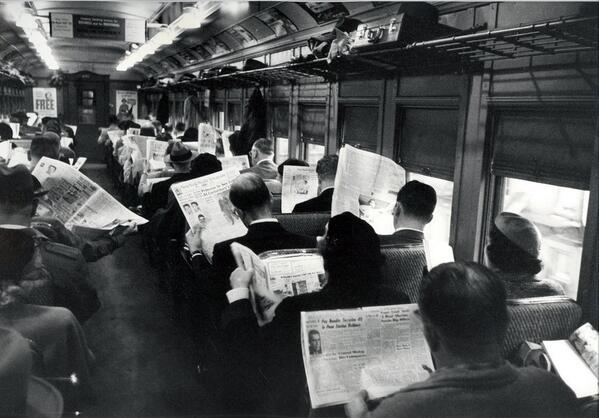
 “All this technology is making us antisocial”



The Canadian Press/FilesThe Reform Act would shift the balance of power in favour of MPs and their riding associations, and away from the leaders and their apparatchiks.
The title of the bill that Conservative MP Michael Chong will introduce next Thursday in the House of Commons, “An Act to amend the Canada Elections Act and the Parliament of Canada Act (reforms),” makes it sound like a modest bit of housekeeping. Yet it contains the seeds of a revolution.
Here’s a scenario to warm the cockles of an opposition leader’s heart: Prime Minister Stephen Harper, his back to the wall after months of scandal, shorn of allies because of his harsh treatment of former chief of staff Nigel Wright, isolated within his own party, finally realizes victory in 2015 is beyond his grasp. Perhaps with a not-so subtle push from senior figures within the Conservative hierarchy, he takes a walk in the snow.
There’s just one wrinkle: It’s not even remotely plausible.
Unless there’s a significant new break in the Duffy story — one that shows the Prime Minister misled his caucus, parliament and the country in saying he knew nothing of Wright’s $90,000 cheque to Sen. Mike Duffy, or the extensive machinations that preceded it, until May 15 — the government is in ride-it-out mode. The chances of a resignation, or a leadership challenge, are nil.
Should it pass, Parliament would never be the same again. The bill would fundamentally recast the relationship between party leaders and caucuses, and with it the whole structure of our politics. The balance of power would shift, irrevocably, in favour of MPs and their riding associations, and away from the leaders and their apparatchiks. In sum, this is a vastly consequential bill, and fully deserving of the historical echoes in its short title: The Reform Act.
In brief, the bill would do three things:
1. It would formalize the convention that the party leader serves only with the confidence of caucus (here defined as the party’s delegation in the Commons; the Senate, being unelected, is properly left to one side). A leadership review vote could be triggered at any time on the receipt of written notice bearing the signatures of at least 15% of the members of caucus. A majority of caucus, voting by secret ballot, would be sufficient to remove the leader, and begin the process of selecting a new one.
2. It would similarly empower caucus to decide whether an MP should be permitted to sit amongst their number. A vote to expel (or to readmit) would be held under the same rules as a leadership review: 15% of caucus to trigger, 50% plus one to decide. A member would also be readmitted automatically on being re-elected to the House under the party banner. In other words, membership in caucus would no longer simply be up to the leader to decide.
3. It would remove the current provision in the Elections Act requiring any candidate for election to have his nomination papers signed by the party leader. Instead, the required endorsement would come from a “nomination officer,” elected by the members of the riding association. In other words, the riding association, and not the leader, would decide who its nominee was. There would be no leader’s veto.
These may not sound like large changes. In fact, they would change everything. The practice in Canada of electing party leaders by the membership at large — or, as in the recent Liberal leadership race, by people with no connection to the party at all — has effectively freed the leader from any obligation to be accountable to caucus. Conversely, the power to expel a member from caucus, or to prevent him from standing at the next election, has given leaders enormous, indeed existential leverage over members of caucus.
The Reform Act would turn each of these on its head. Henceforth, party leaders would serve at the pleasure of caucus, and not the other way around. Leaders would still be powerful — in the case of the prime minister, immensely powerful. They just would not be all-powerful.
I said this was a revolution, but in truth it would do no more than to restore the basic principles of the Westminster model on which we were founded, and under which we were governed for many years. The convention that party leaders must maintain the confidence of caucus at all times may have fallen into disuse in Canada, but it remains very much in force in other parliamentary democracies — witness the removal of Julia Gillard as leader of the Australian Labour party (and prime minister) last June. Likewise, the power given to Canadian party leaders to decide the fate of every candidate or member is one that, to my knowledge, exists in no other parliamentary system.
The bill will go too far for some tastes, not far enough for others. For example, some might object to entrenching the powers of caucus in law, rather than leaving these to each party to decide — though, given the centrality of caucus as a parliamentary, and not just a party institution, this might equally be defended. Others might prefer that caucus were given the power, not just to remove leaders, but to elect them — though I suspect the preferences of caucus members, given their new powers, would be of huge, if not overwhelming importance in any alternate process.
Two more points are worth making. One, a point Chong himself stresses: this is not about the current prime minister, or any party leader. The bill is intended to alter how power is exercised in future Parliaments, not to settle scores within the existing one. To resolve any doubt, the bill would not take effect until after the next election.
Long shot though it is, this is the best chance for meaningful reform of Parliament we are likely to have for many years
Two, this does not by any means exhaust the list of reforms, large and small, our damaged parliamentary democracy requires, from electing committee chairs to changing the electoral system. But it is the key to all the others: until we crack the leaders’ lock on power, nothing else will flow. (Recall the all-party beat-up on MP Mark Warawa this spring, merely for asking to speak without clearance.) Indeed, the mere act of MPs passing such a bill, over the certain opposition of their leaders, would be something of a revolution in itself.
That’s leaders, plural. This is a challenge for members of all parties, not just the Conservatives. If the Reform Act is to have any hope of passing, MPs will have to learn to cooperate across party lines. They’re not used to doing that, and in any case will live in fear of the whips.
Some may even prefer the security of jumping to the leader’s tune to the responsibility of thinking and acting for themselves — or rather, for the people they are supposed to represent.
So they will need encouragement from members of the voting public. Long shot though it is, this is the best chance for meaningful reform of Parliament we are likely to have for many years. The question every MP should be obliged to answer between now and next spring, when the bill comes to a vote, is: will you support the Reform Act? And if not, why should we support you?
The neoliberal assault on labour has now entered its fourth decade. While Canada’s labour union density continues to hover around thirty percent, that number hides declining density rates in the private sector. Equally concerning for the labour movement has been the long assault on the post-war labour freedoms to organize, bargain, and strike. As Leo Panitch and Donald Swartz have shown in their book, governments routinely seek to limit labour’s core freedoms, especially the right to strike. When Stephen Harper’s government claimed that the fragility of the Canadian economy was justification to take away the right of thousands of federal workers to strike, it became clear that strikes themselves were in danger of being legislated away.
 Members of UFCW 401 on strike at the Palace Casino in West Edmonton Mall, December, 2006. [Photo: Paula Kirman/Flickr]
One of labour’s responses has been to challenge legislative assaults in court. To date, those results have been mixed. Almost universally, the courts have shown little interest in expanding labour’s freedom through the Charter. However, when unions have used the Charter to defend postwar gains such as union security or the right to expression on the picket line, there has been some success.
That formula was on full display when the Supreme Court of Canada (SCC) released its decision in Alberta v. UFCW on November 15, 2013. Dubbed the “Palace Casino” dispute, the case addressed state imposed limits on the picket line with regard to personal privacy. In a unanimous ruling, the court struck down Alberta’s Personal Information Protection Act (PIPA) on the grounds that its use in a labour dispute violated the union’s constitutional rights of free expression.
In the age of smartphones and social media, the question of personal privacy has become a central topic of debate in liberal capitalist democracies. In response, some governments have passed legislation designed to protect an individual’s personal information. Alberta’s legislation was modeled after the federal government’s Personal Information Protection and Electronic Documents Act (2000). As detailed in court, the legislation is part of an “international movement toward giving individuals better control over their personal information” (para 13). Both the federal and provincial legislation is designed to limit how private sector organizations will use personal information for commercial gain.
The goal to limit how private organizations collect and use personal information is certainly laudable: everyone should have control over how their private information is used by private businesses for profitable gain. The irony is that while some governments have passed legislation in the name of privacy, many of those same governments are enhancing their surveillance capabilities to spy on their own citizens. One has to look no further than the super data collection centres in Ottawa and the United States or by companies such as Bell, RBC, or Google, Apple, and Microsoft to recognize that current legislation is certainly not capable of protecting individual privacy. Given these limitations, it is likely that personal privacy will be one of the central civil rights battles in this century.
The question of personal privacy on a picket line was at the centre of the debate in Alberta v. UFCW. The very fact that this dispute arose at all speaks to the contradictory nature of personal privacy laws. Ostensibly the law is to protect government and private companies from using personal information without individual consent. In this case, anti-union individuals argued that a union using images from a picket line violated their privacy rights. As in most strikes, unions and employers routinely photograph and capture video images of events on a picket line. Unions use those images for a variety of purposes, one of which is to publicly shame replacement workers or other individuals who cross a picket line. In order to maintain solidarity and morale on a picket line such acts are of vital importance, especially for a strike that lasts several months.
During the course of a yearlong strike at an Edmonton casino, the UFCW captured numerous images of replacement workers, managers, and others who crossed the picket line. The union used those images on various websites and in union pamphlets. The individuals complained that the union’s actions violated PIPA. Alberta’s privacy commissioner agreed with the complainants and ordered the images and personal information destroyed. The UFCW appealed to the courts, stating that the decision violated its freedom of expression rights guaranteed in the Charter of Rights and Freedoms.
The SCC unanimously agreed that PIPA could not be used to limit the expression of the union. In coming to this conclusion, the SCC relied on Pepsi (2002) and Kmart (1999) to conclude that the right to strike is inexplicably linked to free expression. Indeed, the court ruled that the unions routinely used images taken from the picket line to dissuade the public from crossing the line, to build public support for their cause, to gather evidence for future litigation, to build the morale of strikers, and to shame possible replacement workers (para 6).
Moreover, the union captured these images in a public place and during public demonstrations. When an individual leaves the privacy of their own residence, surely there is some expectation that they are forgoing some expectations of privacy? This led the court to conclude:
“Those crossing the picket line would reasonably expect that their image could be caught and disseminated by others such as journalists, for example. Moreover, the personal information collected, used and disclosed by the Union was limited to images of individuals crossing a picket line and did not include intimate biographical details. No intimate details of the lifestyle or personal choices of the individuals were revealed.” (para 26)
Having come to this conclusion, the SCC argued that the sweeping nature of PIPA was disproportionate to the goals of protecting individual privacy and could therefore not be saved by s. 1 of the Charter. In other words, the legislation’s goals of protecting personal privacy did not outweigh the workers’ right to free expression on a picket line.
The court’s unanimity on these questions was somewhat surprising. While Justice Abella and Cromwell had both sided with labour in the past, Justice Rothstein had argued quite strongly against further enhancing union Charter gains in the 2011 Fraser decision. Then again, since Pepsi and Kmart were established precedent, perhaps Rothstein’s rationale makes sense. Nevertheless, it was the unanimity I believe, that led long time union lawyer and advocate of labour union rights Paul Cavalluzzo to declare that the court’s decision “recognized that the right to strike is a fundamental right under the Charter.”
Cavalluzzo’s argument may be stretching reality a little farther than the court was willing to go. The court has not overturned the 1987 labour trilogy which stated that there was no constitutional right to strike.
Yet, Cavalluzzo clearly has his eyes on the forthcoming case examining Saskatchewan’s essential service legislation. In that case, the Saskatchewan Federation of Labour has challenged the Saskatchewan Party’s essential service legislation which takes away the right of thousands of public sector workers to strike. Having agreed to hear that case, it is certainly plausible that the court is now willing to reexamine the 1987 labour trilogy. And one could take some solace in the courts wording that the “use of picket lines is an invaluable tool in the economic arsenal of workers in the collective bargaining process” (para 35).
There are of course inherent limits to the court’s decision. The ruling is premised on the notion that the union was on a legal strike. If a union were to step outside of the law and strike illegally, there is no indication that Charter rights would apply. This suggests that Canada’s specific regime of industrial legality – often dubbed Wagnerism – is closely tied to any potential Charter right to strike.
The Wagner model sets specific rules surrounding the right to organize, bargain, and strike. In particular, it protects the sanctity of a contract, allows workers to grieve management decisions, and allows workers’ third party representation if disciplined. In exchange, workers concede the right to strike except in specific circumstances as the end of a contract. If workers sought to move beyond Wagnerism (by expanding the right to strike for instance) there is little chance that the Charter would assist in significantly challenging the existing economic paradigm.
Indeed, there is some irony about the court’s continued reliance on “legal” strikes as a protected form of expression. Throughout its jurisprudence on this issue, the court routinely defends the right to picket when those actions are legal. Yet, in almost all of its jurisprudence on labour rights, the court continuously states that it does not favour any particular form of labour relations regime. On the strike jurisprudence, that is not true. In all the cases before it, the SCC only defends legal strikes. And legal strikes in Canada can only be understood as an extension of Wagnerism. On this question, the court has backed itself into a corner. It can only defend the right to strike by protecting Canada’s specific Wagner model, something that it refused to do in the 2011 Fraser decision.
Of course, these were not the questions the court was asked. Given the narrow confines of the dispute, this is clearly a victory for the union. In an age when neoliberal models of individualism dominate public discourse, there is little question that collective organizations such as labour unions will be vulnerable to legislation like PIPA. This case shows that anti-union crusaders will use multiple means to weaken the collective capacity of workers to resist employers. The fact that the SCC has read some collective dimensions into its freedom of expression jurisprudence is important. Although it is unlikely that the Charter will offer substantial gains for workers, it remains an important defensive tool to preserve the existing paradigm. On that note, Alberta v. UFCW is a victory. The larger questions about how the working-class can move beyond Wagnerism or neoliberalism, however, will unlikely be answered in court. Rather, those political questions will likely be addressed on a picket line. Whether the SCC would agree that those types of expression were legal or constitutional is an entirely different question. Given past decisions, workers would be wise to approach the SCC with caution. •
Charles Smith teaches at St. Thomas More College in Saskatoon. He maintains a blog at socialjusticeandthecommongood.blogspot.ca where this article first appeared.

77% of Canadians oppose “buy local” ban in #CETA http://canadians.org/media/majority-canadians-oppose-buy-local-ban-canada-eu-trade-deal-poll … @CETAWatch @CouncilofCDNs #canlab #cdnpoli
 CUPE National @cupenat
