Andrew Phillip Chernoff

The Outer Limits To The Inner Depths

‘Shadow banking’ hit $80 trillion in 2014: FSB

The value of unregulated “shadow banking” rose to some $80 trillion (74 trillion euros) last year, according to a report Thursday by the Financial Stability Board (FSB), which advises G20 states on banking reform and oversees regulation of the global financial system.

The report, issued ahead of the upcoming G20s summit in Antalya, said shadow banking transactions not subject to regulatory oversight grew by $2 trillion across 2014 on a broad measure covering 26 jurisdictions and the euro area as a whole, representing some 80 percent of global GDP and 90 percent of global financial system assets.

The FSB, which advises G20 countries on banking reform and was set up six years ago after the implosion of Lehman Brothers, publishes annual reports into the parallel banking system under its remit to promote internationally transparent financial stability.

Shadow banking involves transactions outside traditional banking, including hedge and investment funds.

The Switzerland-based body, chaired by Mark Carney, governor of the Bank of England, is also tasked with identifying potential weak points in the global financial system.

The FSB said it has devised a monitoring framework to track shadow banking developments to enable the identification of systemic risks, “initiating corrective actions where necessary.”

The organization said this year it has added a more narrowly-focused “economic function” overview of shadow banking for its annual monitoring of the non-bank financial sector in order to devise policy responses aimed at risk mitigation.

The FSB, which works in conjunction with national and international financial regulators, estimated that under the new, activity-based, narrow measure of shadow banking, the sector was worth $36 trillion in 2014, from $35 trillion in 2013 — equivalent to some 30 percent of overall non-bank financial sector assets and 60 percent of the GDP of the 26 participating jurisdictions

– ‘Facilitate growth’ –

By comparison, the traditional banking sector was last year worth $135 trillion, 6.4 percent up on 2013.

For Carney, “non-bank financing is a welcome additional source of credit to the real economy. The FSB’s efforts to transform shadow banking into resilient market-based finance, through enhanced vigilance and mitigating financial stability risks, will help facilitate sustainable economic growth”.

But at the same time he stressed the FSB needed to be vigilant in looking to transform shadow banking into a robust source of market finance and at a level of risk which would not destabilize the financial system.

Glenn Stevens, chairman of the FSB Standing Committee on Assessment of Vulnerabilities said: “The annual shadow banking monitoring exercise is an important mechanism for identifying potential financial system vulnerabilities in the non-bank sector.

“The activities-based approach in this year’s report enhances our understanding of the evolving composition of this sector and potential risks.”

Source: ‘Shadow banking’ hit $80 trillion in 2014: regulator – Yahoo Maktoob News
Scientists detect wasps evolving into new species

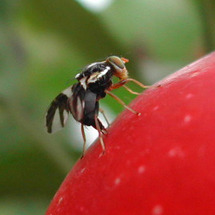
Apple fly

Scientists have observed three species of wasps evolving into three new species, an intriguing case of rapid evolution in action.

Understanding how new species form, a process termed “speciation,” is a central question in biology. Scientists typically study speciation with respect to how populations of a single species diverge to form two distinct species.

However, Glen R. Hood, a doctoral researcher in the lab of Jeffrey Feder, a professor in the University of Notre Dame’s Department of Biological Sciences, notes that speciation may not be an isolated process, as the origin of one species could open up new niche opportunities for associated organisms in higher levels of the food chain, leading to the sequential origin of many other new species.

In a new paper, Hood and colleagues from Rice University, the University of Iowa and Michigan State University show that this is true for three species of parasitic wasps attacking Rhagoletis fruit flies, including the apple-infesting host race of R. pomonella formed from hawthorn flies within the last 160 years.

“As the fly shifts and adapts to new host plants, forming new species, the wasps follow their fly hosts and diverge in kind, resulting in a rapid multiplicative increase of diversity as the effects of natural selection cascade through the ecosystem from fly to wasp,” Hood said. “Furthermore, the same physiological and behavioral mechanisms that adapt flies to their respective host plants and reduce gene flow between diverging populations are the same mechanisms that adapt wasps to their respective fly hosts. Biodiversity therefore can beget increasing levels of biodiversity, termed ‘sequential divergence’ or ‘cascading” speciation.’”

Previous research in the Feder lab had documented both genetic signatures of, and the ecological mechanisms promoting, sequential divergence of one wasp species (Diachasma alloeum) attacking Rhagoletis fruit flies. However, Hood wanted to know the frequency at which these sequential divergence events occurred in this system. In other words, how many new species would form in this manner? He began the project back in 2009 when he first joined the Feder lab as a doctoral student. Now, six years later, he finally has the answer: Sequential divergence not just linearly, but multiplicatively, amplifies biodiversity across the food chain for three different wasp species in the parasite community.

The new research has the potential to impact our understanding of evaluation. Typically studies of the relationship between ecology and speciation are “one-dimensional within ecosystems,” Hood says. “The focus of attention is largely on how genetic and phenotypic variation within a population is transformed by natural selection to create genetic and/or phenotypic differences between species. The consequences of natural selection are therefore usually confined to their effects within a single species. As a result, we now have a good understanding of how natural selection can generate new species.

“However, environmental adaptation also has potential repercussions for the radiation of entire communities,” Hood says.

“Although conditions might not always be optimal for such cascading divergence to occur, the study is the first to confirm its multiplicative action in nature,” Feder adds. “Thus, even if not overly common, sequential divergence still has the potential to make an important contribution to the genesis of biodiversity and could help to explain things such as the restoration of organismal diversity following mass extinctions

The study can be found here: www.pnas.org/content/112/44/E5980.abstract.

Source: Scientists detect wasps evolving into new species // News // Notre Dame News // University of Notre Dame

Trudeau to bring spending message to G20, APEC summits

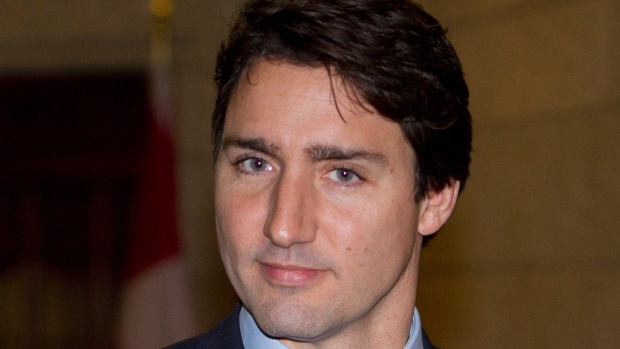
OTTAWA — Prime Minister Justin Trudeau says he will push his spending and growth agenda when he meets leaders from the G20 and Asia-Pacific on his first trip abroad.

Trudeau departs on his first foreign trip on Friday when he travels to Turkey for the G20 leaders’ summit before moving on to the Philippines next week for the APEC summit.

Trudeau says he campaigned on the need to help the middle class by stimulating growth and he says that’s going to be the focus of his discussions with world leaders at both meetings.

During the federal campaign, Trudeau distinguished himself from his Conservative and NDP opponents by promising to run modest deficits to support an infrastructure program to stimulate growth.

Trudeau will meet leaders from around the globe, including U.S. President Barack Obama, during his first week of international travel.

The prime minister says a decision on when to withdraw fighter jets from the U.S.-led coalition bombing Islamic militants in Syria and Iraq is still days or weeks away and will be done in conjunction with allies.

Source: Trudeau to bring spending message to G20, APEC summits | CTV News

New Zealand proposal at conference to bring the first globally binding deal to reduce climate-damaging emissions expected to be controversial

In just a few weeks, world leaders, ministers, officials and observers from 196 countries will converge on Paris to try to nail down the first globally binding deal to reduce climate-damaging emissions.

But on the table will be a controversial proposal put up by New Zealand, which suggests only parts of the deal should be binding.

The aim of the talks is to get all countries to agree to cut their emissions to a level that will keep the warming of the planet to below 2° above the current global average.

The United Nations has estimated that the pledges put in so far would limit warming to 2.7°.

New Zealand agricultural greenhouse gas research centre deputy director Andy Reisinger said he was reasonably optimistic that a deal would be done in Paris, but he was less optimistic about whether it would be enough to slow the global temperature rise.

“I’m not very hopeful that we still have enough time to actually get there, the pledges that we have seen from countries around the world so far simply aren’t in the ball park.

“From all that we know, it’s much easier to get from 4° down to 2.7° of warming than it is to get from 2.7 to 2° of warming.”

If agreed, the new deal would follow on from the Kyoto Protocol – which was not a global deal, as it only required about fifth of UN countries to cut their greenhouse gas emissions.

Many states, non-government organisations and environmental groups want the Paris agreement to bind states to their emissions reduction targets, like Kyoto had.

But, in an effort to get a deal at all, New Zealand has suggested making it binding to reduce emissions, but make the targets unbinding.

Climate Change Minister Tim Groser insisted this was the only way to get the big emitters on board.

“There’s still people in the United States congress that think this is some kind of UN conspiracy to rob the United States of its sovereignty, so to get the United States involved and to get China involved it required a non-threatening compliance mechanism.”

But the Green Party said New Zealand’s proposal was not constructive.

Co-leader James Shaw said the deal had to be completely binding, or else it would do nothing to help the environment.

“Like frankly a number of our trade agreements which contain a lot of fine words about environmental standards, but don’t have any binding and enforceable mechanisms inside them.”

Labour climate change spokesperson Megan Woods said there had to be compulsion on each country to meet their pledge.

“They have to be bound and stand by the number that they have put up and say what they contribute to the global effort.”

The climate change talks kick off on November the 30th with a leaders day, which will include Barack Obama, David Cameron, Xi Jinping and John Key.

The leaders and heads of state are expected to set the groundwork in place and start the momentum for is expected to be a long fortnight of haggling, wrangling and debate.

Source: Controversial NZ proposal at emissions conference | Radio New Zealand News