Cost of Kinder Morgan’s Trans Mountain expansion quietly rises to $6.8 billion

By Robyn Allan November 17th 2015
The pricetag for the Trans Mountain pipeline has gotten a lot bigger. So why is Kinder Morgan keeping Canadians, and the National Energy Board, in the dark?

The preliminary capital cost for Trans Mountain’s expansion has jumped 25 per cent—from $5.4 billion to $6.8 billion. Kinder Morgan Canada president, Ian Anderson, flew down to Houston last month to ensure U.S. investor analysts were informed, but hasn’t advised any of us here in Canada.

He had a perfect opportunity at an energy conference in Calgary last week, but it seems, he missed it.

In July I wrote Kinder Morgan Inc. (KMI), Trans Mountain’s U.S. parent, to enquire about the project’s capital cost. I was sure the estimate had changed.

It was prepared in late 2012 when the Canadian dollar was roughly equivalent to its U.S. counterpart. KMI hadn’t adjusted the figure in its filings with the Securities and Exchange Commission (SEC) and Kinder Morgan Canada hadn’t adjusted the figure in its filings at the National Energy Board (NEB) here at home.

The thing is, the Canadian dollar had been significantly discounted to the U.S. dollar for some time and expectations were it would remain low. Even in “as spent dollars” it is not possible for the capital budget in U.S. and Canadian dollars to remain the same. What’s more, the Board had attached draft conditions and the in-service date had been pushed. Either the SEC or the NEB was being misled.

Attempts to obtain a response from KMI went unaddressed. Finally on September 20, 2015, a spokesperson from Kinder Morgan Canada told me not to expect answers.

In an email I was informed,“Kinder Morgan will update its cost estimates for the proposed Trans Mountain Expansion Project as per its agreements with its Shippers and regulatory requirements as per the commercial agreements filed with the National Energy Board.”

I knew what that meant. I had read the agreement. It meant Kinder Morgan had no intention of making the Canadian public, or the NEB, aware of a jump in its estimated capital cost until after it got the green light to build its project. Kinder Morgan appears to be skirting the negative implications of Trans Mountain’s increased capital cost by keeping Canadians in the dark.

More than an hour and twenty minutes into KMI’s third quarter earnings call in Texas, on October 21, Ian Anderson explained to analysts why the capital cost for Trans Mountain expansion had increased to $6.8 billion (CAD).

As far as the costs go, we’ve been reporting…um… $5.4 billion US dollars for the project for a number of quarters now and that is still a good forecast. The project was originally…um…filed with the regulator as a $5.4 Canadian dollar project so if you convert the $5.4 American, that’s about $6.8 Canadian today and a few things have driven that. Most of them scope changes to the project, foreign exchange on non-Canadian sourced goods and materials as well as the impact of the delay. So if you add those three factors together, the project is currently sitting at about a $6.8 billion Canadian forecast, or about the $5.4 billion US we have been reporting.”

The Canadian capital cost is what is important to the project’s commercial viability. It’s that cost that drives toll rates shippers will pay to send petroleum products along the existing and new pipeline once the system is expanded.

As capital costs increase, so do tolls shippers pay. If tolls exceed a certain limit, shippers can walk. As Mr. Anderson explained, “a toll to our customers in excess of $6.8 billion—that gives them the out.”

Kinder Morgan has take or pay contracts with 13 shippers—11 have signed on for 20 years and two for 15. This means that if they don’t use the capacity, they pay anyway. That’s a liability worth about $2 billion for the average shipper.

Don’t expect any of Trans Mountain’s shippers to say they want out at this point, even as they’re backing away from oil sands projects. They are under a legal obligation to speak well of the Trans Mountain’s expansion until its through the regulatory process. No matter what happens, shippers who have signed up must publicly support Trans Mountain in getting the regulatory approval it seeks. It’s in Clause 2.2 of the contract.

Screenshot of Trans Mountain’s 2012 “Facility Support Agreement”

If shippers want out, they have to wait to tell Kinder Morgan until after the Trans Mountain project is approved and the NEB has issued the Certificate of Public Convenience and Necessity (CPCN).

It’s this certificate that permits Trans Mountain to build and operate its pipeline. Within 90 days of getting the permit, Trans Mountain will deliver a CPCN Cost Estimate to its shippers along with the toll rates the new estimate triggers.

The CPCN Cost Estimate will likely end up being higher than $6.8 billion. The current budget is not as detailed an engineering estimate as the CPCN estimate must be. As well, the NEB has not finalized the conditions Kinder Morgan will be required to meet.

The pertinent issue right now, though, is where the NEB is on this issue. The Board said it would assess the viability of the project. It’s one of the few areas it deemed worthy to include in its outrageously limited scope of issues. When increased capital costs let shippers walk, the project’s viability is threatened.

Curiously, though, the Board has not questioned Trans Mountain’s capital costs, or the terms of the long term contracts—not once in almost two years. Kinder Morgan says its has binding contracts, but the Board has not seen them.

This is how the Board conveniently remains within the bounds of plausible deniability while putting the public interest at risk. Information casting doubt on Trans Mountain’s viability is considered only if it is filed on the hearing record, but the Board asks no questions to ensure it gets there.

Kinder Morgan has no legal obligation to provide the information until the Board asks the company to do so.

The Board can pretend in its report to Cabinet that the capital cost estimate is $5.4 billion CDN when it is not, and contend shippers are bound, when they aren’t.
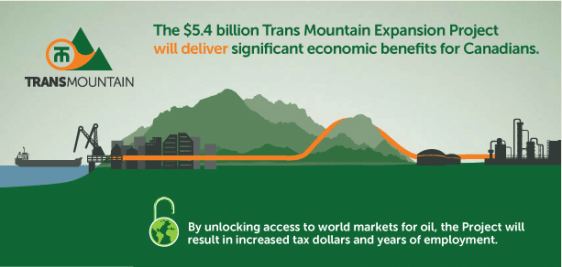
Screenshot from Trans Mountain website still pegging costs at $5.4 billion.

This is another example of how the NEB will fail the public and why the Liberal government promise to overhaul the NEB and redo Trans Mountain’s review can’t happen soon enough.

Source: Cost of Kinder Morgan’s Trans Mountain expansion quietly rises to $6.8 billion | National Observer

Justin Trudeau says Canada to increase number of training troops in Iraq

Prime Minister Justin Trudeau says Canada will increase its number of ground troops in Iraq to train local forces as a way of making a bigger military contribution to the coalition fighting Islamic militants.

Source: Justin Trudeau says Canada to increase number of training troops in Iraq – Politics – CBC News

Denisovans More Genetically Diverse Than Neanderthals

A recent DNA sequencing of Denisovans has determined that the now extinct human species were more genetically diverse than their relatives on the human family tree, the Neanderthals.

In addition, the new study published in the journal Proceedings of the National Academy of Sciences has pushed back the dates of the Denisovans’ origins and clarified the length of time that they inhabited the area around Siberia.

Until now, the human relatives have been shrouded in mystery, with some scientists debating whether Denisovans can actually be considered a separate species.

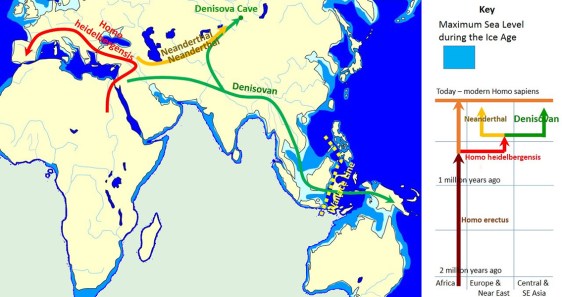
Scientists first discovered evidence of Densiovans’ existence in 2008 when a finger bone was unearthed from Denisova cave in Siberia’s Altai mountains. Initial DNA sequencing suggested that the Denisovans shared a common origin with Neanderthals, but were as distinct from them as Neanderthals were from humans.

Prior to this latest study, only two Denisovan specimens had been described, the finger bone (Denisova 3) which underwent nuclear genome sequencing to identify Denisovans in the first place, and a molar (labelled Denisova 4) from the same site. For the study the team, an international group including scientists from the Max Planck Institute for Evolutionary Anthropology, sequenced the mitochondrial and nuclear DNA on the Denisova 4 molar and another labelled Denisova 8 which had been unearthed from the same cave. The team’s work has extended the number of known Denisovans to three.

The DNA from Denisova 8 accumulated fewer mutations than the Denisova 3 and 4 samples, which would mean it came from an individual in the range of 60,000 years older than the other two. The initial Denisovan discovery was determined to have lived 50,000 years ago.

According to the study, the finding suggests “Denisovans were present in the region over several millennia.” This in turn gives the impression that they were particularly hardy, capable of surviving in the extremely harsh conditions of Siberia. However, with so few remains to study, scientists can only speculate as to what the mysterious creatures were really like.

Physically, the Denisovan teeth are distinct from those of modern humans and Neanderthals. They are significantly larger and lack certain traits, such as some raised points on the crowns of molars, that are found in both modern humans and Neanderthals.

In terms of diversity, even though the Denisovan remains were all found in a single cave they exhibited almost as much as found in modern humans. Dr. Bence Viola, a co-author of the study from the University of Toronto, explained the diversity in an interview with the New York Times. “You actually see more diversity in the Denisovans than you’ve seen in Neanderthals from Spain to the Altais, and that, I think, is pretty astonishing,”

Dr. Viola went on to speculate that whereas Neanderthals started to inbreed after ice age glaciers forced them into isolated regions of southern Europe, the Denisovans were able to move freely through regions of Asia which had not been buried under ice.

It has previously been established that Denisovan DNA is present in that of modern humans, with chunks of it found in the DNA of Polynesians, New Guineans and Australian aborigines. It could even explain the development of certain human characteristics. One of the co-authors, Svante Pääbo, told Livescience “In Tibet, an adaptation to live at high altitudes where there is little oxygen in the air has been shown to come from Denisovans.”

The DNA extracted from the Denisova 8 tooth largely bears a close relationship with Neanderthals, although some of it seems only distantly connected to either Neanderthal or human DNA. This has led to suggestions that the Denisovans may have bred with hitherto undiscovered hominin species.

Source: Denisovans More Genetically Diverse Than Neanderthals

Canucks Future Watch: 11.16.15

Tuesday, 11.17.2015 / 10:12 AM PT                       By Tyson Giuriato

Brock Boeser’s hot start to the season continued as he netted five points in two games this past weekend, while Nicklas Jensen made his return to the Utica lineup.


Brock Boeser snapped his three-game point drought with a four-point game on Friday as he scored once and setup three others. On Saturday, Boeser added his seventh goal of the season, which puts him in a tie for sixth in the NCAA and in a tie for first among first-year players.

POSITION TEAM LEAGUE GP G A PTS PIM +/-
Right Wing North Dakota NCAA 12 7 5 12 6 +13

Cole Cassels continues to have a tough start to the season as he has now gone five games without a point. On the bright side, Cassels finished with a season-high three shots on goal in Friday’s loss.

POSITION TEAM LEAGUE GP G A PTS PIM +/-
Centre Utica Comets AHL 10 0 1 1 2 -5

Thatcher Demko saw his shutout streak end at 208:36 on Saturday. The 2014 second-rounder made 33 saves in a 6-3 win. Despite giving up four goals, Demko still has only allowed a combined 10 goals in nine starts this season.

POSITION TEAM LEAGUE GP W L T GAA SV%
Goaltender Boston College NCAA 9 8 1 0 0.67 .974

Alex Friesen finished with three shots on goal and was plus-1 in Saturday’s 2-1 loss to Syracuse. Friesen entered the contest on a two-game point streak.

POSITION TEAM LEAGUE GP G A PTS PIM +/-
Centre Utica Comets AHL 11 0 3 3 20 +1

Brendan Gaunce cooled off a bit this past weekend as he failed to register a point in two games, but did manage a combined seven shots on goal.

POSITION TEAM LEAGUE GP G A PTS PIM +/-
Left Wing Utica Comets AHL 9 3 3 6 6 E

Alex Grenier picked up one assist in two games this past weekend. The 6-foot-4 winger leads the Comets with 41 shots on goal this season.

POSITION TEAM LEAGUE GP G A PTS PIM +/-
Right Wing Utica Comets AHL 13 2 5 7 14 -3

Nicklas Jensen returned to the lineup after missing six games with an injury. The 2011 first-rounder picked up where he left off by scoring just over six minutes into his return. Jensen has picked up a point in four-of-seven games played this season.

POSITION TEAM LEAGUE GP G A PTS PIM +/-
Right Wing Utica Comets AHL 7 2 2 4 4 +2

Ronalds Kenins remains sidelined with a lower-body injury.

POSITION TEAM LEAGUE GP G A PTS PIM +/-
Left Wing Utica Comets AHL 4 0 0 0 4 -1

Hunter Shinkaruk continued his hot start to the season by scoring his 10th goal in his 12th game on Friday. He was rewarded for his stellar play as the 2013 first-rounder was called-up by the Canucks, where he made his NHL debut in Montreal on Monday.

POSITION TEAM LEAGUE GP G A PTS PIM +/-
Left Wing Utica Comets AHL 12 10 3 13 4 +2

Jordan Subban finished with one shot on goal and was minus-3 in his lone game this past week. The former Belleville Bull has now gone five games without registering a point after starting the season with four in his first four games.

POSITION TEAM LEAGUE GP G A PTS PIM +/-
Defence Utica Comets AHL 9 1 3 4 2 -1

Linden Vey picked up two helpers on Friday night, which gave him back-to-back games with multiple assists. He was held off the scoresheet on Saturday, but did finish with four shots on goal. Vey currently leads the team in assists with nine.

POSITION TEAM LEAGUE GP G A PTS PIM +/-
Centre Utica Comets AHL 13 1 9 10 2 -1

Source: Canucks Future Watch: 11.16.15 – Vancouver Canucks – Features

Researchers Create Light-Driven Submersible Nano machines

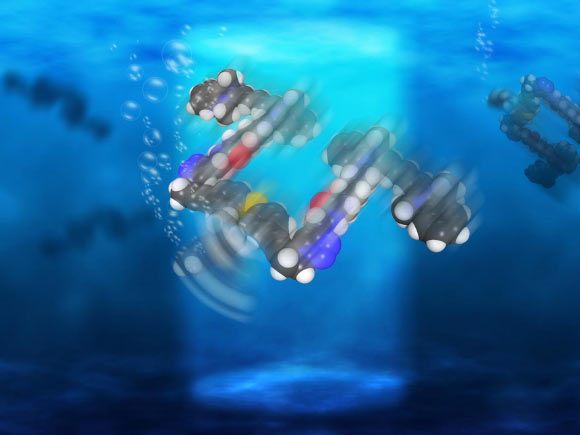
U.S. scientists have created UV light-driven, single-molecule submersibles. Image credit: Loic Samuel / Rice University.

A team of researchers from North Carolina State University and Rice University has created UV light-driven, unimolecular ‘submarines’ that contain just 244 atoms.

Each of the nanomachines has a motor powered by UV light. With each full revolution, the motor’s tail-like propeller moves the machine forward 18 nm.

And with the motors running at more than a million RPM, that translates into speed.

“These are the fastest-moving molecules ever seen in solution,” said Prof. James Tour of Rice University in Houston, Texas, senior author of a study published this month in the journal Nano Letters.

The study proves molecular motors are powerful enough to drive the sub-10-nm submarines through solutions of moving molecules of about the same size.

“This is akin to a person walking across a basketball court with 1,000 people throwing basketballs at him,” Prof. Tour explained.

The motors of these nanomachines operate more like a bacteria’s flagellum than a propeller and complete each revolution in four steps.

“When excited by light, the double bond that holds the rotor to the body becomes a single bond, allowing it to rotate a quarter step. As the motor seeks to return to a lower energy state, it jumps adjacent atoms for another quarter turn. The process repeats as long as the light is on,” the researchers explained.

For comparison tests, they made nanosubmarines with no motors, slow motors and motors that paddle back and forth.

All versions of the nanomachines have pontoons that fluoresce red when excited by a laser.

“One of the challenges was arming the motors with the appropriate fluorophores for tracking without altering the fast rotation,” said Victor García-López, a graduate student at Rice University and lead author on the study.

The researchers then measured how well their nanomachines moved. “We had used scanning tunneling microscopy and fluorescence microscopy to watch our cars drive, but that wouldn’t work for the submersibles. They would drift out of focus pretty quickly,” Prof. Tour said.

The team sandwiched a drop of diluted acetonitrile liquid containing a few nanosubmarines between two slides and used a custom confocal fluorescence microscope to hit it from opposite sides with both UV light and a red laser.

“The laser defined a column of light in the solution within which tracking occurred,” García-López said.

The team hopes future submersible nanomachines will be able to carry cargoes for medical and other purposes.

Source: Researchers Create Light-Driven Submersible Nanomachines | Chemistry, Nanotechnologies | Sci-News.com