An increase so small it keeps B.C. minimum wage workers in poverty : Policy Note

By Iglika Ivanova    http://www.policynote.ca

September 20, 2016

Today, BC’s lowest paid workers get a 40-cent raise. The latest increase of the provincial minimum wage—now $10.85 per hour for most workers isn’t much to celebrate. It works out to an extra $16 per week for someone working full-time – and that doesn’t stretch far in a province with such high cost of living.

In fact, minimum wage workers continue to earn less than the poverty line even if they work full-time 52-weeks a year.

It’s not just minimum wage earners who face the threat of working poverty. Making a dollar or two above than the minimum wage is still a poverty wage for a full-time, full-year worker. Even three dollars above the minimum wage barely clears today’s poverty line for a single person, and falls short of the poverty line for a single parent with one child.

Nearly half a million British Columbians—a quarter of all paid employees in the province—work for $15 or less per hour. And they would all benefit from a $15 minimum wage.

Critics like to argue that the minimum wage doesn’t matter for working poverty because too few people earn exactly the minimum. But they seem to forget that nearly half a million British Columbians—a quarter of all paid employees in the province—work for $15 or less per hour. And they would all benefit from a $15 minimum wage.

Some people mistakenly believe that low-wage jobs are filled mainly by teenagers and youth who work part-time after school, live with their parents, and are on their way to a better-paying job after graduation. But Statistics Canada data reveal a very different reality for the low-wage workforce earning less than $15.

The majority of BC’s low-wage workers are adults between the ages of 25 and 64 (53%). Few are (21%). Most are supporting a household (58%). And most are women (58%). students

The majority of low-wage workers also have full-time jobs (59%), and just over half work for corporations with more than 100 employees.

And while there is some truth to the belief that for youth, low-wage jobs are a stepping stone to higher-paying careers, many low-wage workers over 25 face a real risk of getting stuck in their jobs with little opportunity to earn more. Almost half of BC workers over 25 who earn less than $15 have been in the same job for longer than three years (45%).

Studies also indicate that recent immigrants and persons of colour are likely to be overrepresented among the low-wage workforce.

BC’s economy relies on these workers but it’s failing to provide them with a path out of poverty. The consequences are far reaching: from chronic stress and health problems to poorer school performance for children – and, fundamentally, lost human potential. At the end of the day this isn’t just a problem for low-wage workers and their families – it affects us all.

It’s also why a growing number of cities in the US, including Seattle, San Francisco and Los Angeles are moving to a $15 minimum wage. Washington DC, New York State and California have also approved gradual increases to reach a $15 minimum wage, and a number of other states are considering similar measures.

Closer to home, Alberta’s provincial government officially passed regulations to raise the minimum wage to $15 by 2018, and is eliminating its lower “liquor servers” wage.

BC’s economy relies on these workers but it’s failing to provide them with a path out of poverty.

Any proposal to increase the minimum wage by any amount seems to be met with dire warnings of massive job losses and impending economic doom. But neither history nor academic research supports these claims.

Just last year, the CCPA published a report by UBC economics professor David Green, whose analysis indicates that the likely impact of a $15 minimum wage on job losses would be much lower than feared. His research found that the overall benefits of meaningfully raising the minimum wage through a series of staged increases would far outweigh the costs.

A $15 minimum wage would significantly boost the income of low-wage workers as a group and, unlike today’s small minimum wage increase, would be enough to lift full-time workers out of poverty.

An often-overlooked benefit of higher minimum wages is that they make low-wage, high-turnover business models more expensive, thus creating incentives for employers to offer better, more stable jobs.

The evidence is clear: sticking with BC’s poverty-level minimum wage just doesn’t make sense.

This piece was originally published in The Province.

Source: An increase so small it keeps minimum wage workers in poverty : Policy Note

Canadian Mint worker allegedly hid nearly $180Gs worth of gold up his butt

POSTMEDIA NETWORK

September 20, 2016

A 35-year-old Royal Canadian Mint employee awaits his fate after being accused of smuggling gold from the Crown corporation facility, hiding the precious metal in his bum.

Court heard Leston Lawrence, of Barrhaven, Ont., brought several chunks of gold — in cookie-sized 7.4 oz. nuggets called “pucks” — to an Ottawa Gold Buyers outlet where he was paid approximately $6,800 for each puck, depending on the price of gold that day.

Lawrence reportedly then took those cheques and deposited them at a Royal Bank in the same mall where the Gold Buyers was located.

Courts records showed 18 pucks were sold between Nov. 27, 2014 and March 12, 2015.

Along with dozens of gold coins redeemed, the total value of the alleged theft is conservatively estimated at $179,015.

Among Lawrence’s duties at the Mint was to measure the purity of gold coins.

It was a bank teller who first raised her eyebrows about Lawrence’s actions – noting the number of deposits, his requests to wire the money overseas and the fact his profile listed the Mint as his place of employment.

The RCMP was soon involved and court heard a search warrant revealed four Mint-style pucks inside Lawrence’s safety deposit box.

Investigators also found a container of Vaseline in his locker. It was also suggested a gold puck concealed in an anal cavity might not be detectable by the handheld wand used as a secondary security measure at the Mint after an employee sets off the metal detector.

Defence lawyer Gary Barnes argued there were many ways Lawrence could have legitimately obtained the gold and said he made no efforts to be devious with the gold buyers or the bank.

Crown attorney David Friesen, however, said there was “compelling evidence” of someone “secreting (gold) on his person and taking it out of the Mint.”

Lawrence faces a number of charges including theft, laundering the proceeds of crime, possession of stolen property and breach of trust.

Justice Peter Doody reserved decision until Nov. 9.

Source: Canadian Mint worker allegedly hid nearly $180Gs worth of gold up his butt

Canada’s Trudeau sidesteps questions after extradition talks with China are revealed 

Canada says the talks, long-sought by Beijing, are unrelated to the recent release of a Canadian held by China for two years on spying charges.

Reuters

September 21, 2016

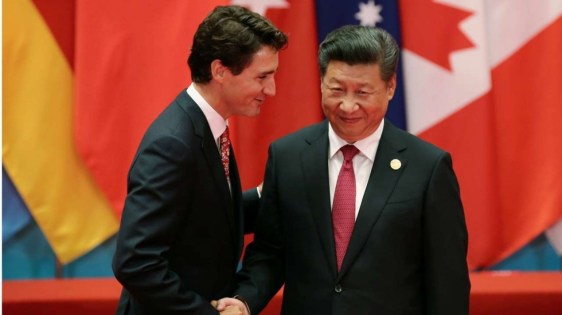
Canadian Prime Minister Justin Trudeau sidestepped questions on Tuesday on the sensitive topic of possible extraditions to China, saying Canada would stick to high standards when deciding whether to return Chinese citizens.

A statement posted on Trudeau’s website said his national security adviser went to Beijing last week and agreed to start talks about an extradition treaty as part of a security dialogue.

China, which wants the return of officials suspected of corruption who it says are hiding in Canada, has long pressed for such a treaty.

Some Western countries are reluctant to sign extradition deals with China, partly out of concern about the integrity of its judicial system and treatment of prisoners.

Some people convicted of corruption face the death penalty. Canada refuses to send people to countries without assurances they will not be executed.

“Extradition is certainly one of the things the Chinese have indicated they want to talk about,” Trudeau told a televised news conference at the United Nations.

“As everyone knows, Canada has very high standards in terms of extradition treaties in accordance with our values. But we’re happy to have a high-level security dialogue,” he said.

News of the Beijing meeting revived speculation Ottawa had made concessions to secure the return of Kevin Garratt, a Canadian citizen convicted of spying, whom China deported last week.

kevin-and-julia-garratt

Kevin Garratt, a Canadian held in China for two years on suspicion of spying, with wife after been freed and arriving in Vancouver on Thursday, September 16 in a diplomatic triumph for Prime Minister Justin Trudeau.

Canadian officials insist there was no deal, and that the Garratt release was unrelated to the extradition talks.

Garratt’s release was widely seen as a triumph for Trudeau, who visited Beijing earlier this month in a bid to seal closer economic ties. Chinese Premier Li Keqiang arrives in Canada on Wednesday for the start of a three-day trip.

The opposition Conservative Party, long suspicious of China’s human rights record, accused Trudeau of abandoning Canadian principles.

“Does the prime minister not understand that our openness to China should be about encouraging China to adopt our values for human rights, as opposed to us giving in to China’s?” interim party leader Rona Ambrose told the House of Commons.

China does not have extradition treaties with the United States, Australia or Canada, which according to state media are the most popular destinations for suspected economic criminals from China.

A number of suspects wanted by China are known to reside in Canada.

They include the Vancouver-based property developer Michael Ching Mo Yeung, who is wanted by China for alleged embezzlement and concealing stolen funds.

Ching, who is seeking refugee status in Canada, is wanted under the name Cheng Muyang. He is the son of Cheng Weigao, the former Communist Party secretary of Hebei province who was expelled from the party for corruption and died in 2010.

Source: Canada’s Trudeau sidesteps questions after extradition talks with China are revealed | South China Morning Post

Vancouver empty homes tax would target Airbnb rentals 

New municpal tax would include secondary properties being booked on Airbnb

By Laura Kane, The Canadian Press

September 20, 2016

Vancouver’s proposed empty homes tax would include secondary properties being booked on the vacation rental website Airbnb, with the maximum fine for people who evade the levy set at $10,000.

New details of the tax emerged on Tuesday, when council voted to push ahead with public consultations. Mayor Gregor Robertson stressed the aim was to free up supply in the city’s crunched rental housing market.

“Ultimately, the goal is to get thousands of units back into rental housing at a time when it’s almost impossible to find a rental home,” Robertson told council.

The province granted Vancouver the authority to create the tax in July, months after a city-commissioned report found that about 10,800 homes were sitting empty, most of them condos.

Staff have been speaking with experts and researching other jurisdictions’ taxes and presented a report Tuesday with their suggested approach. The levy would be the first of its kind in Canada.

The report proposes that the tax be administered similarly to the British Columbia Home Owner Grant. A parcel of residential property that serves as a principal residence for an owner, long-term tenant or a friend or family member would not be taxed.

That means that secondary properties – such as investment condos – that are sitting empty or being rented out for short-term stays using sites like Airbnb would be subject to the tax.

Tsur Somerville, a University of British Columbia business professor, said it made sense to apply the empty homes tax to properties being used for short-term rentals, even though they’re not actually empty.

“In a city where accommodation is really, really scarce, the first priority should be housing people who live and work here,” he said in an interview.

The tax would not apply to people renting out their primary residences on Airbnb, or to basement suites, rooms or laneway homes that are either sitting empty or rented for short-term stays.

Airbnb said in a statement it’s committed to working with government to establish fair, sensible rules, including around taxation.

The city is also working on separate regulations for short-term rentals, with a report to council expected next month.

Public consultation on the empty homes tax will begin this fall, with a proposed bylaw introduced to council in November. The tax would be in place for the 2017 year, with the first payments in 2018.

There are many questions left to be settled through public talks, including whether secondary residences that are vacant only for part of the year should be exempt. The tax rate is also still being considered, with a current proposal of between 0.5 and 2 per cent of assessed value.

Penalties are also still being debated. The maximum fine the city can impose under its charter is $10,000, but it will consider a combination of the fine plus a higher tax rate for people who fail to self-declare or fraudulently declare, said Kathleen Llewellyn-Thomas, general manager of community services.

Robertson said the city has asked the province many times to increase the maximum fine.

The council vote was split 7-3, with councillors from the centre-right Non-Partisan Association opposed. Coun. George Affleck called the tax a “bureaucratic nightmare” and said the city should instead encourage the building of more townhomes and rowhomes.

The mayor dismissed the councillors’ concerns as “fear-mongering.” Residents will be asked to declare the status of their properties as part of the regular property tax process, with enforcement through random and targeted audits and response to complaints, Robertson said.

“I’d ask Coun. Affleck if he thinks the Home Owners Grant is a bureaucratic nightmare, or income tax is a bureaucratic nightmare,” he said.

Vancouver’s rental vacancy rate of 0.6 per cent is the lowest of any major city in Canada and its rents are the most expensive, housing planner Matthew Bourke said. If just 2,000 units became available for rent, the vacancy rate would lift to a healthy 3.5 per cent, Bourke said.

Tony Gioventu, executive director of the Condominium Home Owners Association of B.C., said condos built since 2010 do not have restrictions on rentals. Many of the vacant units are thought to be in new buildings in upscale neighbourhoods like Coal Harbour, he said.

But if those condos were rented out, they wouldn’t be “affordable housing,” he pointed out.

“They’d probably be rented out for $3,000 a month.”

Source: Vancouver empty homes tax would target Airbnb rentals – Macleans.ca

TSX rises to 1-week high as banks gain, energy weighs 

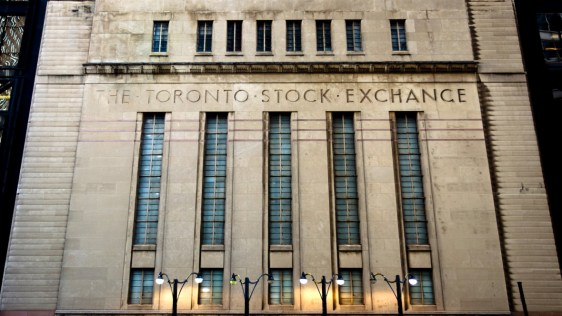
tsx-stock-exchange-building

reuters.com

Tuesday September 20, 2016

* TSX ends up 25.75 points, or 0.18 percent, at 14,521.98

* Seven of the TSX’s 10 main groups move higher

By Fergal Smith

TORONTO, Sept 20 (Reuters) – Canada’s main stock index rose to a one-week high on Tuesday as shares of banks and other financial sector companies climbed, while the energy sector weighed as oil prices hit six-week lows intraday.

The financials group, which accounts for 35 percent of the index’s weight, gained 0.6 percent as investors braced for the outcomes of Federal Reserve and Bank of Japan policy meetings on Wednesday.

Royal Bank of Canada advanced 0.4 percent to C$81.06 and Bank of Nova Scotia added 0.6 percent to C$70.43.

Today’s rally shows that investors still have faith in major central banks to keep interest rates low, said Ian Scott, a portfolio manager at Manulife Asset Management.

The interest-rate-sensitive telecommunications sector rose 0.5 percent, while both the consumer discretionary and consumer staples sectors gained more than 0.8 percent and technology stocks advanced 1.3 percent.

“There has just been a shift toward some info-tech (information technology stocks) lately in general because they do have some good growth,” Scott said.

The Toronto Stock Exchange’s S&P/TSX composite index closed up 25.75 points, or 0.18 percent, at 14,521.98. It touched its highest since Sept. 12 at 14,573.25.

Seven of the index’s 10 main groups ended higher.

The energy group fell 1 percent as U.S. oil prices fell to the lowest in six weeks before settling modestly higher. One of the most influential weights on the index was Encana Corp , which fell 7.6 percent to C$12.04 after the natural gas producer said late on Monday it will issue 107 million new shares to raise just more than $1 billion. Cenovus Energy Inc declined 1.3 percent to C$17.52.

The materials group, which includes precious and base metals miners and fertilizer companies, edged 0.1 percent higher.

Barrick Gold’s Veladero gold mine in Argentine, closed by the government last week after a solution containing cyanide leaked, could resume operations in the next two weeks, the company’s president said on Monday. Its shares were unchanged at C$22.71.

Agrium Inc advanced 0.8 percent to C$119.81. The company’s CEO said that tough farm conditions make it the right time for a merger with Potash Corp of Saskatchewan Inc

Canadian interest rates will stay low for longer as the economy faces strong headwinds and business investment is weaker than expected, but government spending on infrastructure will help growth, Bank of Canada Governor Stephen Poloz said.

(Additional reporting by Alastair Sharp; Editing by Nick Zieminski and James Dalgleish)

Source: CANADA STOCKS-TSX rises to 1-week high as banks gain, energy weighs | Kitco News