Harlem Globetrotter makes 130-foot catwalk shot at old Maple Leaf Gardens

TORONTO, March 29, 2016 /CNW/ – To celebrate their arrival into Canada during their 90th year, Harlem Globetrotter Buckets Blakes made an improbable shot from the catwalk at the old Maple Leaf Gardens to a hoop over 130-feet below.  It was the 2nd attempt ever tried.  WATCH (https://youtu.be/h6i24xpN9R0) – music and footage approved for broadcast (credit Harlem Globetrotters).

The Globetrotters Canadian tour brings games to 18 Canadian cities in six provinces.  Full schedule available at www.harlemglobetrotters.com/canada.

The Globetrotters were founded in 1926 – five years before Maple Leaf Gardens opened.  The complex is now Mattamy Athletic Centre.

SOURCE Harlem Globetrotters

Source: Harlem Globetrotter makes 130-foot catwalk shot at old Maple Leaf Gardens

Campbell’s soup cans to become BPA free

THE world’s most iconic soup brand has pledged to remove a controversial ingredient from its products.

March 29, 201612:46pm    http://www.news.com.au

While opinions remain divided over whether it’s a dangerous toxin or a harmless preservative, Campbell Soup Co will stop using the chemical Bisphenol A in its canned products by the middle of next year, in response to an impassioned consumer campaign.

Bisphenol A, also known as BPA, is used to make the epoxy-resin linings of metal food cans.

It is an endocrine disrupter that has been linked with cancer, brain damage and hormonal problems, but the level of safe use is in dispute.

Some scientific studies support the argument that low doses are okay, while others argue that low doses may be even more harmful.

The US-based Breast Cancer Fund, which lobbied hard for BPA to be removed, says it’s linked to breast and prostate cancer, infertility, early puberty in girls, type-2 diabetes, obesity and attention deficit hyperactivity disorder.

Both the US Food and Drug Administration and Food Standards Australia New Zealand maintain that BPA is safe at the current levels used in food, but activists have labelled it a ‘child killer’.

The chemical, which research has shown the female sex hormone oestrogen, can affect the body’s endocrine system.

Its effects are often more pronounced in children and infants, leading to the chemical being phased out of use in baby bottles in Australia.

Now, after more than 40 years of using BPA to line its canned soups, gravies and convenience meals, Campbell Soup Co has began switching to alternative packaging.

About 75 per cent of Campbell’s soups will be sold in non-BPA cans by the end of this year, according to the company, which maintains that BPA is among the world’s safest options.

“Our priority throughout this transition has been, and will continue to be, food safety,” said Mike Mulshine, Campbell’s senior program manager of packaging.

In most instances, Campbell is trying to replace BPA with acrylic and polyester options.

Campbell’s began studying alternatives to BPA in 2012, after a six-month activist campaign targeted the company, sending more than 70,000 letters demanding a change.

“Parents want to be sure when they serve Campbell’s Soup to their kids that it is free of toxic chemicals that contribute to disease,” Rachel Lincoln Sarnoff, Executive Director of Healthy Children Healthy World, said at the time.

Source: Campbell’s soup cans to become BPA free

Australia’s Great Barrier Reef hit by ‘worst’ bleaching

The Great Barrier Reef is the world’s largest living structure and can be seen from space.

Evidence that Australia’s Great Barrier Reef is experiencing its worst coral bleaching on record has renewed calls for the UN to list it as “in-danger”.

The National Coral Bleaching Taskforce says 95% of reefs from Cairns to Papua New Guinea are now severely bleached.

It says only four reefs out of 520 have no evidence of bleaching.

Unesco voted not to put the reef on its World Heritage in Danger list last year, but green groups want the decision reassessed.

Coral taskforce convener Professor Terry Hughes told the BBC his team was yet to find the southern border where the bleaching ended.

“Tomorrow we will continue further south from Cairns to Townsville about 400km (250 miles) and spend the day scoring another 150 reefs,” Professor Hughes said.


Mass coral bleaching

  • Coral bleaching is caused by rising water temperatures resulting from two natural warm currents.
  • It is exacerbated by man-made climate change, as the oceans are absorbing about 93% of the increase in the earth’s heat.
  • Bleaching happens when corals under stress drive out the algae known as zooxanthellae that give them colour.
  • If normal conditions return, the corals can recover, but it can take decades, and if the stress continues the corals can die.
  • The current worldwide bleaching episode is predicted to be the worst on record.

Experts say it is too early to tell whether the corals will recover, but scientists “in the water” are already reporting up to 50% mortality of bleached corals.

Climate change and the effects of El Nino are being blamed for the rise in sea temperatures that causes coral bleaching.

“What we’re seeing now is unequivocally to do with climate change,” Professor Justin Martin University of Queensland told the ABC.

“[At] the Paris climate change meeting, essentially the whole world has agreed this is climate change, and we’re seeing climate change play out across our reefs”.

Source: Australia’s Great Barrier Reef hit by ‘worst’ bleaching – BBC News

NHL exec notes link between fighting, concussions: report

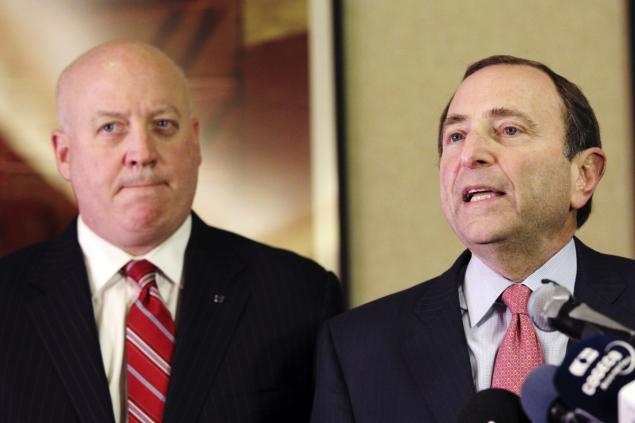
Deputy commissioner Bill Daly (l.) and commissioner Gary Bettman (r.) in 2012.

BY   NEW YORK DAILY NEWS

Monday, March 28, 2016, 9:23 PM

Emails unsealed by a U.S. federal court in Minneapolis revealed NHL deputy commissioner Bill Daly wrote in September 2011 that fighting in hockey leads to more brain injuries, including “personal tragedies,” according to a TSN report.

Daly was responding to an email from commissioner Gary Bettman, sent to Daly and then-player-safety executive Brendan Shanahan. Bettman was commenting on a Globe and Mail article Shanahan sent the other two with the headline “Getting rid of hockey’s goons.” Three NHL enforcers, Derek Boogaard, Rick Rypien and Wade Belak, all died during a span of less than four months in 2011.

“Do you remember what happened when we tried to eliminate the staged fights?” Bettman emailed to Daly and Shanahan on Sept. 3, 2011, according to TSN. “The ‘fighters’ objected and so did the pa [NHLPA]. Eliminating fighting would mean eliminating the jobs of the ‘fighters’, meaning that these guys would not have NHL careers. An interesting question is whether being an NHL fighter does this to you (I don’t believe so) or whether a certain type of person (who wouldn’t otherwise be skilled enough to be an NHL player) gravitates to this job (I believe more likely).”

“I tend to think its a little bit of both,” Daly responded in an email the NHL sought to keep sealed. “Fighting raises the incidence of head injuries/concussions, which raises the incidence of depression onset, which raises the incidence of personal tragedies.”

Bettman then replied that he believed “the fighting and possible concussions could aggravate a condition. But if you think about the tragedies there were probably certain predispositions. Again, though, the bigger issue is whether the [NHLPA]would consent to in effect eliminate a certain type of ‘role’ and player. And, if they don’t, we might try to do it anyway and take the ‘fight’ (pun intended).”

Shanahan then wrote that the previous NHLPA regime would be against that. He also said that while fighters used to aspire to rise above the fourth line, now those players train to be fighters.

The fighters used to ingest alcohol or cocaine to deal with their role, Shanahan said, but “now they take pills. Pills to sleep. Pills to wake up. Pills to ease the pain. Pills to amp up. Getting them online.”

The discussion contradicts the NHL’s public stance on the dangers of concussions. Last year, Bettman tried to downplay the link between concussions and chronic traumatic encephalopathy (CTE.) This month at the NHL general managers’ meeting, after NFL safety executive Jeff Miller admitted a link between CTE and football, Bettman said “I think it’s fairly clear that playing hockey isn’t the same as playing football.”

After former players filed suit against the NHL in September 2013 alleging the league covered up knowledge of the long-term effects of head trauma, the NHL hired Edelman Berland, a market-research company, to find out how fans perceive violence in the NHL compared to the NFL.

In response to Michael Berland, the market-research company’s chief executive, NHL executive vice president of communications Gary Meagher described the NFL’s concern for player safety as “smoke and mirrors”

Meagher also wrote “The nhl has never been in the business of trying to make the game safer at all levels and we have never tried to sell the fact that this is who we are… The question is: should we be in that business and if we were, what could we possibly achieve without throwing millions of dollars at education.”

He later added that the NHL doesn’t see selling safety “as an important part of our mandate.”

Source: NHL exec notes link between fighting, concussions: report – NY Daily News